
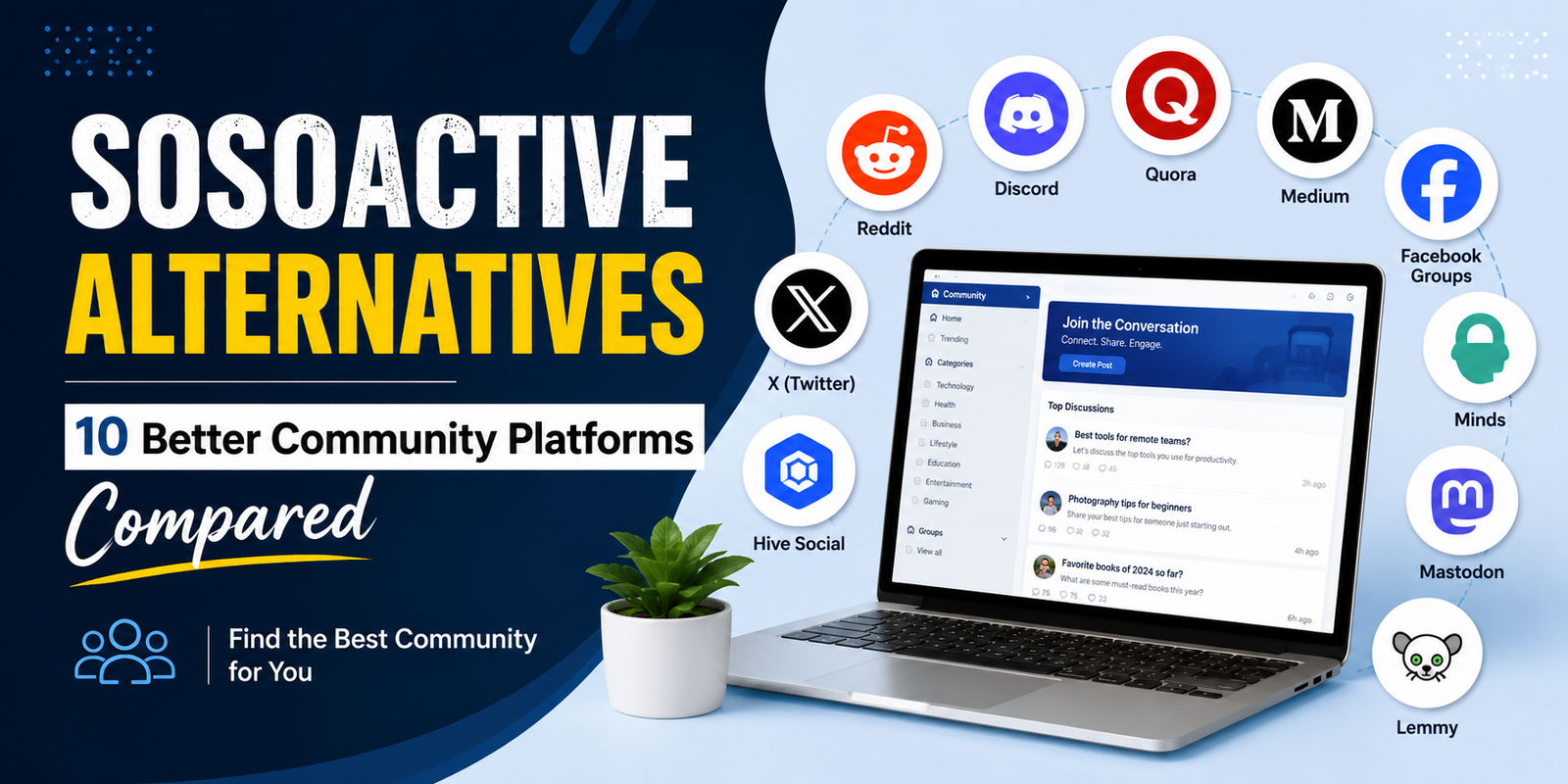
Sometimes a platform fades away, but the need for genuine online communities never does.
If you’ve been searching for a place that offers the same social feel but with better features, stronger moderation, and a more active user base, you’re not alone. Plenty of people who once enjoyed Sosoactive have started looking elsewhere because online communities have changed a lot over the years. Today’s platforms are faster, more personalized, and built around real conversations instead of endless scrolling.
The good news? You have plenty of options. Whether you’re interested in discussion forums, niche communities, professional networking, or hobby-based groups, there’s likely a platform that fits your style much better.
Why People Are Looking Beyond Sosoactive
Online communities evolve quickly. A website that was popular a decade ago might struggle to keep users engaged today. Many former users started exploring other platforms because they wanted fresher content, better moderation, mobile-friendly experiences, and larger active communities.
That doesn’t necessarily mean Sosoactive was a bad platform. It simply belongs to an earlier generation of community websites, while newer services have introduced smarter recommendation systems, stronger privacy controls, and more focused discussions.
Choosing the right alternative depends on what you actually want. Some people enjoy anonymous conversations. Others prefer professional networking, hobby groups, or long-form discussions.
What Makes a Great Community Platform?
Before comparing the options, it’s worth understanding what separates a good community from one that people eventually abandon.
| Feature | Why It Matters |
|---|---|
| Active members | Keeps conversations alive every day |
| Strong moderation | Reduces spam and toxic discussions |
| Mobile support | Makes participation easier anywhere |
| Topic variety | Allows users to discover new interests |
| Privacy controls | Gives users better control over personal information |
| Content discovery | Helps quality discussions reach more people |
| Community guidelines | Creates healthier conversations |
A combination of these features usually determines whether a platform continues growing or slowly loses its audience.
Also Explore Similar Topics: How to Use Sosoactive
1. Reddit
If I had to recommend one place for almost anyone leaving an older discussion website, Reddit would probably be the first suggestion. It isn’t perfect, and longtime users complain about certain changes every year, but the variety is hard to match.
The biggest strength is the subreddit system. Instead of joining one massive community where every topic competes for attention, you can participate in thousands of focused groups covering photography, technology, finance, gaming, fitness, cooking, and practically every hobby imaginable.
Some discussions are surprisingly thoughtful, while others are pure entertainment. That balance keeps people coming back.
Best for: General discussions and niche communities.
2. Discord
Discord started as a gaming chat platform, but it has become far more than that.
Today you’ll find communities dedicated to coding, investing, books, languages, sports, startups, and local events. Conversations happen in real time, which creates a completely different experience from traditional forums.
I’ve joined servers where people answer technical questions within minutes. That kind of interaction simply doesn’t happen on many older community websites anymore.
The only downside is that valuable information sometimes gets buried inside ongoing chats.
Best for: Live communities and group conversations.
3. Quora
Quora focuses on questions and detailed answers rather than casual conversations.
If you’re someone who enjoys learning from experts, entrepreneurs, doctors, developers, or experienced hobbyists, it’s surprisingly useful. Many professionals regularly contribute answers that go far beyond what you’d expect from a normal forum.
Quality varies depending on the topic, but the best discussions remain incredibly informative.
Best for: Knowledge sharing and expert opinions.
4. Medium
Sometimes you don’t want quick comments.
You want thoughtful stories.
Medium offers exactly that. Writers publish detailed articles covering personal experiences, technology, business, travel, health, and productivity.
The comment sections often create smaller but meaningful communities where readers discuss ideas instead of arguing over headlines.
For readers who enjoy longer content, it’s refreshing.
Best for: Reading and sharing long-form ideas.
5. Facebook Groups
Despite Facebook’s changing popularity among younger audiences, its Groups feature remains one of the largest online community systems available.
You’ll find local neighborhood groups, parenting communities, small business owners, photographers, fitness coaches, book clubs, and thousands of specialized interest groups.
One thing I’ve noticed is how practical these communities can be. Need recommendations for a plumber? Local hiking trail? Small business advice? Someone usually responds within minutes.
The experience depends heavily on how well each group is moderated.
Best for: Local communities and hobby groups.
6. X (Formerly Twitter)
X isn’t a traditional forum, but communities naturally form around conversations, trends, creators, and hashtags.
Breaking news spreads almost instantly. Industry experts often share insights before blogs or news websites publish full stories.
The fast pace isn’t for everyone, though. Discussions move quickly, and older posts disappear beneath newer conversations.
If staying informed matters more than reading long discussions, it’s worth exploring.
Best for: Real-time conversations and trending topics.
7. Hive Social
Hive Social takes inspiration from older social networking experiences while adding modern design elements.
Users can customize profiles, follow creators, share photos, and interact through comments without feeling overwhelmed by complicated algorithms.
The community isn’t as massive as some competitors, but many users appreciate its relaxed atmosphere.
Smaller communities sometimes feel more personal, and Hive reflects that pretty well.
Best for: Casual social networking.
8. Minds
Privacy-conscious users often discover Minds while searching for alternative social platforms.
The platform emphasizes transparency, open discussions, and user control over content. Unlike many mainstream networks, it focuses heavily on free expression while still maintaining moderation policies.
Communities range from technology to politics, art, cryptocurrency, education, and entertainment.
It isn’t for everyone, but users who value openness often stay for years.
Best for: Privacy-focused discussions.
9. Mastodon
Mastodon works differently from traditional social media.
Instead of one central platform, it operates through thousands of independently managed servers. Each community establishes its own rules while remaining connected to the wider network.
That decentralized structure appeals to users looking for more control over their online experience.
It takes a little time to understand, but once everything clicks, it becomes surprisingly enjoyable.
Best for: Decentralized social networking.
10. Lemmy
Lemmy has gained attention as an open-source discussion platform that resembles classic internet forums mixed with Reddit-style communities.
Users can create topic-based communities, vote on content, and participate in discussions without relying on a single company to manage everything.
Many technology enthusiasts have adopted it, although communities covering entertainment, science, finance, travel, and lifestyle continue growing.
If you miss older internet discussion boards, Lemmy might feel familiar.
Best for: Open-source community discussions.
Side-by-Side Comparison
| Platform | Community Type | Best For | Mobile App | Free to Use |
|---|---|---|---|---|
| Forums | General discussions | Yes | Yes | |
| Discord | Chat servers | Real-time communities | Yes | Yes |
| Quora | Q&A | Learning | Yes | Yes |
| Medium | Publishing | Reading & writing | Yes | Yes |
| Facebook Groups | Social groups | Local communities | Yes | Yes |
| X | Social networking | News & trends | Yes | Yes |
| Hive Social | Social platform | Casual networking | Yes | Yes |
| Minds | Social platform | Privacy-focused users | Yes | Yes |
| Mastodon | Decentralized network | Independent communities | Yes | Yes |
| Lemmy | Community forums | Open-source discussions | Yes | Yes |
Which Platform Fits Different Types of Users?
Not everyone joins online communities for the same reason.
If you enjoy discovering interesting conversations every day, Reddit remains one of the strongest choices because nearly every subject has an active community.
People who prefer instant discussions often feel more comfortable on Discord, where conversations happen live rather than through traditional forum threads.
For readers who love thoughtful articles, Medium offers a calmer experience that rewards longer attention spans. Professionals looking for detailed answers frequently turn to Quora because many responses come from people with firsthand experience.
Those who value privacy and open-source technology usually gravitate toward Mastodon, Minds, or Lemmy instead of mainstream social networks.
The best platform isn’t necessarily the largest one. It’s the one where you actually enjoy spending time.
Are Smaller Community Platforms Worth Trying?
Absolutely.
Large websites naturally attract bigger audiences, but smaller communities often build stronger relationships.
I’ve seen niche communities where members genuinely help each other solve problems instead of chasing likes or viral posts. That sense of belonging can be difficult to find on massive social networks.
It’s worth exploring a few options before settling on one.
Final Thoughts
The internet offers far more community platforms today than it did years ago. While Sosoactive introduced many users to online discussions, modern alternatives provide richer conversations, stronger moderation, better mobile experiences, and communities built around almost every interest imaginable.
There’s no perfect platform because everyone interacts differently online. Some people enjoy fast-moving conversations, others prefer detailed articles, and plenty simply want a friendly place where discussions still feel genuine.
Trying a few communities before committing is usually the smartest approach. Chances are you’ll quickly discover one that feels like home.
Frequently Asked Questions
What is the best alternative to Sosoactive?
Reddit is often considered the best overall alternative because it offers thousands of active communities covering nearly every topic imaginable.
Is Sosoactive still available?
Availability can change over time, but many users now prefer newer community platforms with larger audiences, improved features, and better mobile support.
Which platform is best for hobby communities?
Facebook Groups, Reddit, and Discord all have strong hobby-focused communities where members regularly share advice, experiences, and recommendations.
Which alternative offers the most privacy?
Mastodon and Minds are popular choices for users who want greater control over privacy and how their content is managed.
Are these community platforms free?
Yes. Most major community platforms offer free accounts, though some provide optional premium subscriptions with extra features.
Can I join multiple community platforms?
Definitely. Many people use Reddit for discussions, Discord for live chats, Quora for learning, and Medium for reading articles. Using different platforms for different purposes often provides the best overall experience.
Follow Us For More Informational Blogs
