
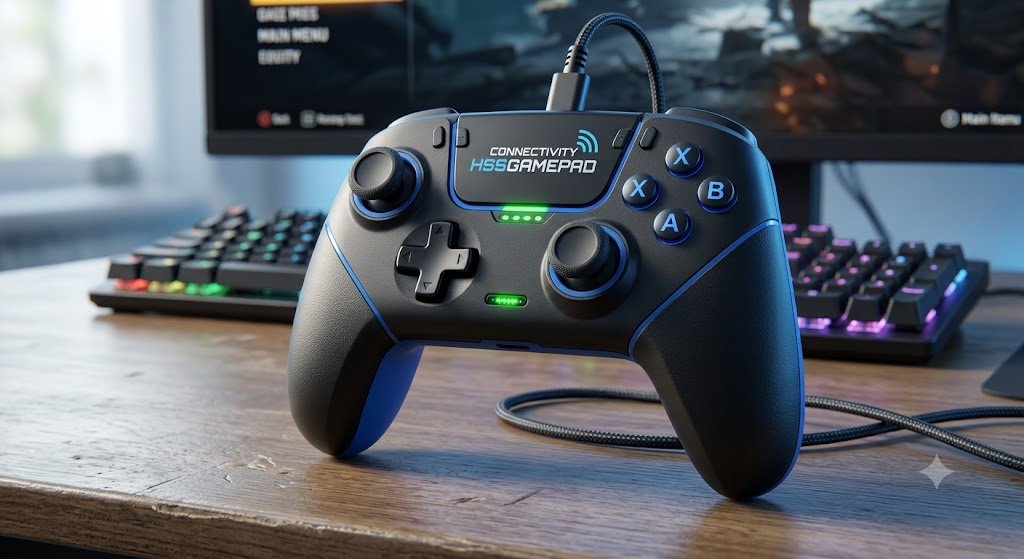
You’re halfway through a close match, your opponent is one hit away, and suddenly the controller stops responding. The character keeps moving in the wrong direction while you’re pressing every button and hoping the connection comes back. It’s a small technical problem, but at that moment, it feels incredibly annoying.
A reliable controller connection doesn’t usually get much attention when it’s working properly. You only notice it when input starts lagging, pairing fails, or the gamepad disconnects without warning. Understanding connectivity hssgamepad settings can help you avoid those interruptions and choose the right connection method for your device.
What Does HSSGamepad Connectivity Mean?
Gamepad connectivity is simply the way a controller communicates with a PC, phone, tablet, smart TV, or another supported gaming device. Every time you move a joystick or press a trigger, the controller sends that input to the connected system.
Depending on the model, an HSSGamepad may offer Bluetooth, a 2.4 GHz wireless receiver, or a direct USB connection. These options serve the same basic purpose, but they don’t always feel the same during gameplay. Bluetooth is convenient, a wireless dongle can offer a steadier response, and a cable usually provides the most direct connection.
There isn’t one perfect method for everyone. Someone playing a casual mobile game may prefer Bluetooth, while a PC player who cares about fast reactions may feel more comfortable using a receiver or cable.
Common HSSGamepad Connection Methods
Bluetooth Connection
Bluetooth is often the easiest option because it doesn’t require an extra receiver. You turn on pairing mode, open the Bluetooth settings on your device, select the controller, and wait for it to connect.
It’s useful for mobile gaming, tablets, laptops, and compatible smart TVs. The setup is usually quick, especially after the first pairing. Your device may reconnect automatically the next time you switch on the gamepad.
But Bluetooth can occasionally be affected by distance, nearby wireless devices, or an old pairing saved on another device. That last issue catches people out quite often. The controller appears to be available, yet it quietly keeps trying to reconnect to the phone or computer it was previously using.
2.4 GHz Wireless Receiver
A 2.4 GHz connection normally works through a small USB dongle. You insert the receiver into the gaming device, switch on the controller, and the two should communicate automatically.
This method can feel more stable than ordinary Bluetooth, particularly on a desktop computer. It also avoids searching through pairing menus every time you move between devices.
The obvious downside is the receiver itself. It’s tiny, easy to misplace, and it occupies a USB port. And yes, losing one in a drawer full of old cables is surprisingly easy.
Wired USB Connection
A wired connection may seem less exciting, but it’s dependable. The controller is connected directly to the device through a compatible USB cable, which removes most wireless interference and battery concerns.
Wired play makes sense when you’re sitting close to a PC or console and don’t mind the cable. It’s also a useful troubleshooting method. When a controller works through USB but not wirelessly, you immediately know the buttons and internal controls are probably fine. The issue is more likely related to pairing, battery power, interference, or software.
How to Connect an HSSGamepad
The exact button combination can vary between models, so the controller manual should always be your first reference. Still, the general setup process is fairly similar.
Charge the gamepad before starting. A low battery can cause failed pairing, random disconnections, and delayed input that looks like a software problem.
For Bluetooth, switch the controller into pairing mode and open the Bluetooth menu on your device. Look for the gamepad name, select it, and allow the pairing process to finish. A flashing indicator light will often become steady once the connection succeeds.
For a wireless receiver, plug the dongle into an available USB port before turning on the gamepad. Give the device a few seconds to detect it. On a PC, the operating system may also install a basic controller driver automatically.
For wired play, use a data-capable USB cable. Some cheap cables only provide power, so the controller may charge without being recognized. That’s frustrating because the cable looks fine from the outside.
Why the Controller Won’t Connect
Connection failures don’t always mean the gamepad is damaged. Most problems come from a handful of ordinary causes.
The Battery Is Too Low
A controller may still switch on when its battery is weak, but that doesn’t mean it has enough power to maintain a stable wireless signal. Charge it fully and test the connection again before changing complicated settings.
It’s Still Paired With Another Device
A gamepad previously connected to a phone, tablet, or second computer may try to reconnect there first. Turn off Bluetooth on the old device or remove the saved controller pairing.
Then clear the gamepad from the current device’s Bluetooth list and pair it again as a new accessory. Old pairing records can become corrupted or simply stop behaving properly.
Wireless Interference Is Affecting the Signal
Wi-Fi routers, wireless headphones, keyboards, mice, and other Bluetooth accessories may operate in the same general frequency range. When too many devices are active nearby, controller performance can become inconsistent.
Move closer to the gaming device and temporarily switch off accessories you aren’t using. Don’t hide the receiver behind a metal computer case, either. A short USB extension cable can help place it in a clearer position.
You May Also Like: Sankkucomplex
The USB Cable or Port Is Faulty
Try a second cable and another USB port. It sounds almost too simple, but damaged cables cause a lot of unnecessary troubleshooting.
Front-panel PC ports may also behave differently from ports connected directly to the motherboard. When the gamepad isn’t detected, testing a rear USB port is worth the effort.
Drivers or Firmware Need Attention
A computer may recognize the controller incorrectly because of an outdated, missing, or corrupted driver. Check the device manager to see whether the gamepad appears with a warning symbol.
Firmware can also affect pairing and compatibility. Use update files only from the controller manufacturer or its official support source. Installing random firmware from an unknown website is risky and may make the controller unusable.
Reducing Input Lag and Random Disconnections
A controller can be technically connected and still feel unpleasant to use. Delayed buttons, uneven joystick movement, and short freezes are usually signs that the connection needs attention.
Start by reducing the distance between the controller and the receiver. Keep large metal objects away from the signal path, and make sure the battery is comfortably charged.
When possible, compare all available connection modes. Play the same game for a few minutes using Bluetooth, the wireless receiver, and a USB cable. You’ll quickly notice which one feels most consistent on your setup.
It’s also worth closing unnecessary background programs on a struggling computer. A slow system can sometimes create stuttering that feels like controller lag, even though the connection isn’t the real cause.
Choosing the Right Connection for Your Device
The best option depends on where and how you play.
Bluetooth is a sensible choice for phones, tablets, and relaxed gaming sessions where convenience matters most. A 2.4 GHz receiver is often better suited to PC gaming when you want wireless freedom with a more dedicated connection. Wired USB remains a strong option for competitive games, long sessions, or situations where wireless reliability has become irritating.
For many players, the best part of connectivity hssgamepad support is the ability to switch methods. You don’t have to keep fighting with Bluetooth if it’s unstable in your room. Plug in the receiver or cable and carry on playing.
Keeping the Connection Reliable
Small habits can prevent bigger problems later. Charge the controller before long gaming sessions, store the USB receiver somewhere safe, and avoid wrapping the cable too tightly when you put it away.
Remove old Bluetooth pairings when you stop using a device. Keeping several outdated connections saved may create confusion when the controller is switched on.
Clean the USB ports gently as well. Dust can prevent a cable or receiver from sitting properly, leading to a connection that drops whenever the desk moves. Don’t push metal tools into a port. Compressed air or a soft cleaning brush is safer.
Final Thoughts
A gamepad should disappear into the gaming experience. You shouldn’t be thinking about Bluetooth menus, drivers, receivers, or flashing lights while trying to enjoy a match.
Most connection problems can be solved by checking the battery, removing old pairings, reducing interference, testing another cable, or switching connection modes. Begin with the simple fixes before assuming there’s a serious hardware fault.
Once the controller is connected through the method that suits your device, the difference is easy to feel. Inputs become consistent, gameplay feels calmer, and you can focus on the game instead of watching the connection indicator.
FAQS
Q:Can an HSSGamepad connect to a phone?
A: It may connect to a phone through Bluetooth when both the controller and mobile device support compatible gamepad profiles. Game support matters too. Some mobile games accept controllers directly, while others are designed only for touchscreen input.
Q:Why does my HSSGamepad keep disconnecting?
A: Common causes include a weak battery, wireless interference, excessive distance, outdated pairing information, driver problems, or a damaged cable. Charge the controller first, move closer to the device, and create a fresh pairing.
Q:Is wired gaming better than Bluetooth?
A: Wired gaming usually offers a direct and stable connection without relying on battery power. Bluetooth is more convenient because there’s no cable. For casual play, the difference may be small, but fast competitive games can make connection delays easier to notice.
Q:Why is my controller connected but not working in the game?
A: The game may not support controllers, or it may expect a different input mode. Check the game’s control settings and confirm that the controller is recognized by the operating system. On a PC, you may also need to select the correct controller profile.
Q:Can I use the gamepad while it’s charging?
A: Many controllers support wired play while charging, though this depends on the model. Make sure the cable supports data transfer because a charging-only cable may provide power without sending controller inputs.
Q:How can I improve connectivity hssgamepad performance?
A: Keep the battery charged, stay within a reasonable distance, remove old pairings, reduce nearby wireless interference, and update official drivers or firmware when available. Testing Bluetooth, receiver, and wired modes will help you find the most reliable option for your setup.
