
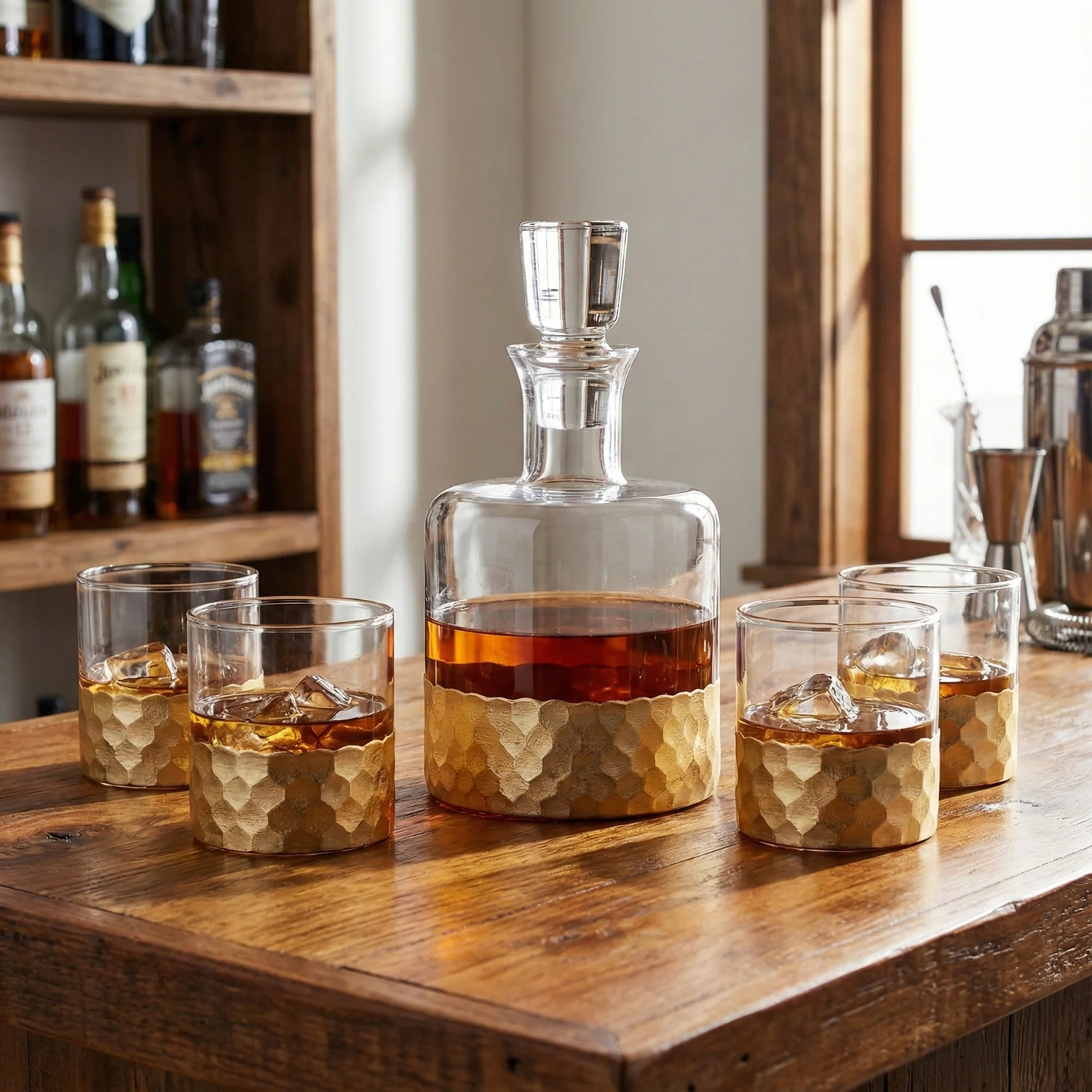
The first decanter I ever noticed wasn’t sitting in a fancy cocktail bar. It was on a slightly dusty shelf in my uncle’s living room, catching the late-afternoon light. The cut glass looked expensive, even though he later admitted it came from a department-store sale. Still, pouring bourbon from it felt like a small occasion.
That’s really the charm of a whiskey decanter. It won’t magically improve an ordinary bottle, but it can make serving a drink feel more thoughtful. It adds a bit of character to a home bar, looks good when friends come over, and turns a simple evening pour into something you’ll slow down and enjoy.
What Does a Decanter Actually Do?
A decanter is a glass or crystal container used to hold and serve spirits. Most designs have a wide base, a narrow neck, and a fitted stopper.
Wine decanters are mainly used to expose wine to air and separate it from sediment. Whiskey is different. It doesn’t need to breathe before drinking, and there’s usually no sediment to remove. Here, the benefit is mostly about presentation and convenience.
That doesn’t make it pointless. Far from it. A good decanter can become the centerpiece of a drinks cabinet, especially when the glass catches warm light or shows off the amber color of bourbon, rye, or Scotch.
Does Decanting Improve the Taste?
Not in the way people sometimes suggest.
Moving whiskey from its original bottle into another container won’t make it older, smoother, or more complex. Once a spirit leaves the barrel, the aging process has essentially stopped. A ten-year-old Scotch won’t slowly become a twelve-year-old Scotch on your shelf.
What can change is the experience around the drink. The weight of the bottle, the sound of the stopper, and the slower act of pouring can make you pay closer attention. Taste isn’t only chemical; mood, setting, and expectation play a part too.
Glass, Crystal, and Lead-Free Crystal
The material matters more than many buyers realize. It affects the clarity, weight, durability, and safety of the container.
Standard Glass
Glass decanters are usually affordable, durable, and easy to care for. They’re a sensible choice for everyday use, particularly if you prefer a clean, modern design.
They may not sparkle quite as dramatically as cut crystal, but good glass still looks sharp on a bar cart. It’s also less stressful to own. If someone handles it a little too enthusiastically during a party, you won’t immediately picture your bank balance.
Traditional Crystal
Crystal has a brighter shine and often feels heavier in the hand. It can be cut into detailed patterns that reflect light beautifully, which is why vintage crystal barware has such a strong appeal.
Older crystal, however, may contain lead. Small amounts can move into alcohol during prolonged storage. That doesn’t mean every antique decanter is dangerous to touch or use for a quick serving, but it isn’t the best place to keep spirits for weeks or months.
Lead-Free Crystal
Lead-free crystal offers much of the brilliance and weight of traditional crystal without the same storage concern. Manufacturers typically use minerals such as zinc, barium, or titanium to create the familiar clarity and sparkle.
For most homes, this is the sweet spot. It looks special, feels substantial, and is better suited to regular use.
How to Choose the Right Decanter
A beautiful design might catch your attention first. Before buying, though, check how it works in everyday life. Some gorgeous pieces are surprisingly awkward to pour or nearly impossible to clean.
Look for a Well-Fitting Stopper
The stopper should sit securely in the neck without wobbling. It doesn’t need to form a laboratory-grade vacuum, but a loose fit allows more air to enter and alcohol to evaporate.
Many crystal stoppers are individually matched to their containers, so replacing a broken one can be difficult. Handle it over a counter or table rather than lifting it while walking across the room. I learned that lesson with a glass bottle top and a tile floor. The floor won.
Match the Capacity to Your Bottle
A standard bottle of spirits contains 750 milliliters. Choose a container with at least that capacity if you want to transfer the entire bottle.
A little extra room helps prevent spills, but an oversized container can leave too much empty space above the liquid. If you usually decant half a bottle at a time, a smaller design may suit you better.
Check the Pouring Shape
A narrow, controlled lip makes serving easier. Thick rims and very wide openings can cause drips, particularly when the vessel is full and heavy.
Think about grip as well. Smooth, round designs can become slippery when condensation, water, or an unnoticed splash reaches the outside. Faceted sides or a gently tapered neck are often easier to hold.
Choose a Style You’ll Still Like Next Year
Trends move quickly. One year, every bar cart seems to have square-cut crystal; the next, smoked glass and unusual geometric shapes are everywhere.
There’s nothing wrong with choosing something fashionable, but it should still feel at home in your space. Simple designs tend to age well. Vintage-inspired patterns bring warmth, while plain glass works nicely in modern rooms.
Personalized engraving can be a lovely touch for a wedding, retirement, birthday, or housewarming gift. Just double-check the spelling before ordering. An engraved mistake has a way of becoming a family joke forever.
How Long Can Whiskey Stay in a Decanter?
Whiskey is more stable than wine, but it isn’t completely unaffected by its surroundings. Air, heat, and direct sunlight can gradually change its character.
For short-term serving or regular enjoyment, a properly sealed container is generally fine. If you plan to keep an expensive or rare bottle for years, leave it in the original packaging. The original closure is designed for storage, and the labeled bottle preserves information about the producer, age statement, strength, and batch.
A nearly empty decanter deserves extra attention. More empty space means more oxygen inside. That can slowly flatten delicate aromas, especially if the stopper isn’t snug.
Don’t Miss Out: Aspirion Health billing solutions
Keep It Away From Sunlight and Heat
Direct sun looks wonderful passing through amber liquor, but it isn’t good for long-term storage. UV exposure and high temperatures may affect flavor and color over time.
Place your barware in a shaded cabinet, on a shelf away from a window, or in a room with a fairly steady temperature. Don’t put it directly above a radiator or beside a hot kitchen appliance.
Cleaning Without Leaving Cloudy Marks
Cleaning is the part nobody gets excited about, yet it makes a huge difference. Narrow necks and patterned interiors can trap moisture, dust, or residue.
Rinse a new container before its first use. Warm water is usually enough, though a small amount of mild dish soap can help remove manufacturing dust. Avoid strongly scented cleaners because lingering fragrance is the last thing you want in a pour of rye.
For stubborn marks, use decanter-cleaning beads with warm water. Swirl them gently so they move across the inner surface. A mixture of uncooked rice and water is sometimes recommended as a home remedy, but cleaning beads are smoother and less likely to scratch delicate glass.
Rinse several times, then leave the vessel upside down on a stable drying stand. It needs to dry completely before being refilled. Trapped water can dilute the spirit and create cloudy spots.
And please don’t force a towel through the neck with a spoon. It feels clever for about ten seconds, right up until the fabric gets stuck.
Is It Worth Buying One?
That depends on how you enjoy your drinks.
If you care only about preserving a spirit exactly as the producer bottled it, keeping the original bottle makes perfect sense. Labels also tell stories. A lineup of bottles from different distilleries can be just as attractive as decorative glassware.
But if you enjoy hosting, building a home bar, or making small routines feel more intentional, a whiskey decanter can earn its place. It’s part serving vessel, part decoration, and part ritual.
You don’t need the heaviest crystal or the most elaborate pattern. A clear, well-made glass design with a secure stopper will do the job nicely. Spend based on craftsmanship and usefulness, not on grand claims about improving flavor.
A Small Detail That Changes the Mood
A decanter won’t rescue bad liquor, and it won’t turn an everyday bottle into a rare release. What it can do is change the atmosphere.
There’s something satisfying about setting out two glasses, lifting a weighty stopper, and pouring a drink without rushing. Maybe it’s a quiet night after a long week. Maybe an old friend has dropped by. Either way, the moment feels a little more deliberate.
And sometimes that’s enough. Good barware isn’t about showing off. It’s about enjoying what you already have.
FAQS
Q:Can different types of whiskey be mixed in one decanter?
A: They can, but the flavors will blend. If you switch from smoky Scotch to a soft bourbon, rinse and fully dry the container first. Otherwise, the final pour may carry traces of peat, spice, or sweetness from the previous spirit.
Q:Should the original bottle be kept?
A: Yes, especially for premium, collectible, or limited-release spirits. The bottle proves what the spirit is and includes useful details such as alcohol strength and batch information. It’s also helpful if you later want to return the remaining liquor to its original container.
Q:Can bourbon, rye, and Scotch all be decanted?
A: Yes. Most distilled spirits can be served this way. The same storage rules apply: use a secure stopper and protect the liquid from sunlight, heat, and excessive air exposure.
Q:Is a completely airtight seal necessary?
A: A snug seal is more important than a perfectly airtight one. The goal is to limit evaporation and reduce ongoing contact with fresh air. If you can smell the spirit strongly while the stopper is in place, the fit may be too loose.
Q:Are antique crystal decanters safe?
A: Some older crystal contains lead, so long-term alcohol storage isn’t recommended unless the material has been properly identified as lead-free. Antique pieces can still be displayed or used briefly for serving, but modern lead-free crystal is the easier choice for regular storage.
Q:Why does a decanter become cloudy?
A: Cloudiness usually comes from mineral deposits, leftover moisture, or residue inside the glass. Thorough rinsing, careful drying, and occasional cleaning with proper glassware beads can help restore clarity.
