
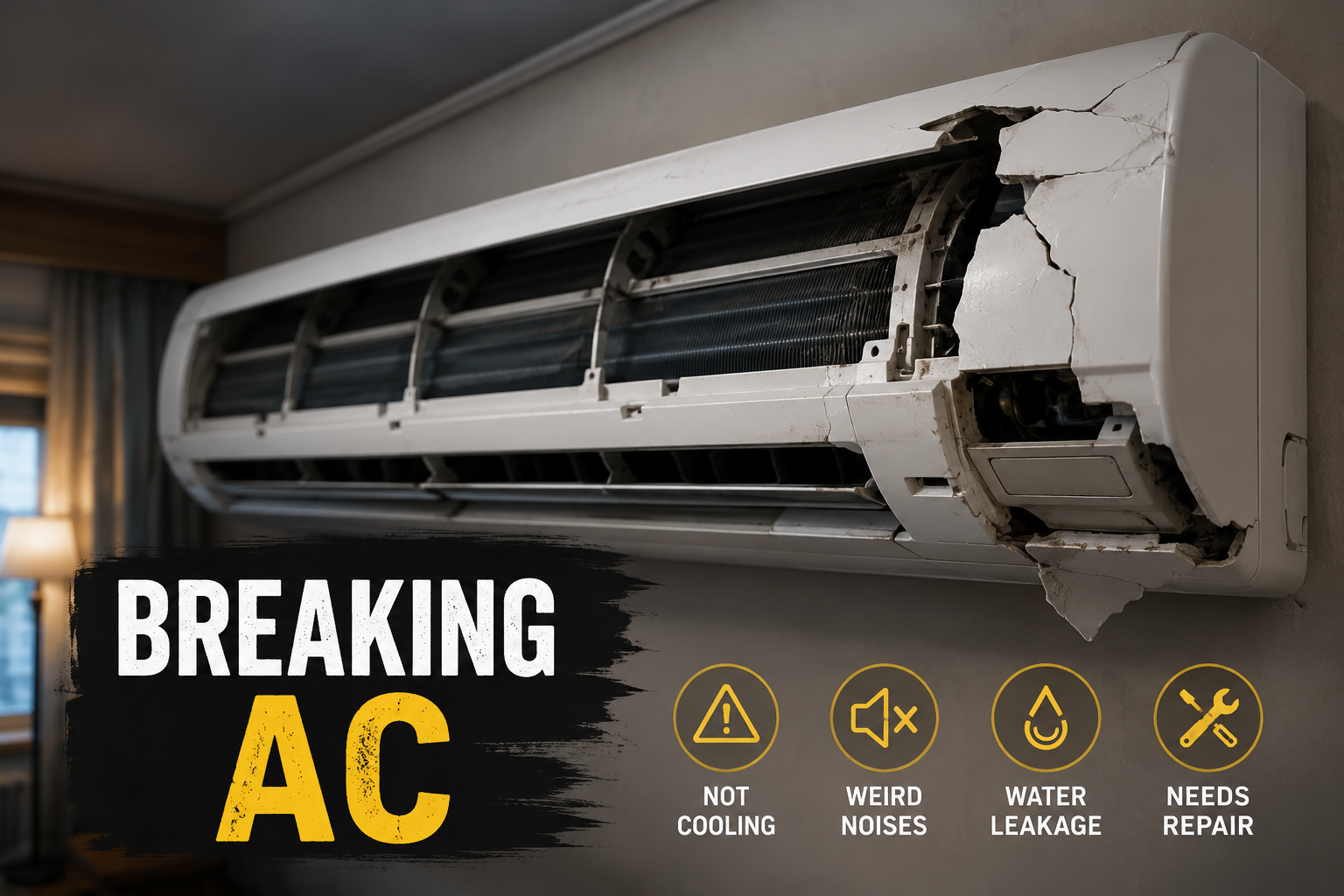
There are few household problems as frustrating as an air conditioner failing in the middle of a hot day. Whether it happens during a heatwave or simply on a warm afternoon, losing cool air can quickly make a home uncomfortable.
Many people search for breaking ac because they’re trying to understand why their cooling system suddenly stopped working, whether it’s safe to keep using it, and if the issue can be fixed without immediately replacing the entire unit.
The good news is that not every air conditioner failure is serious. Some problems are surprisingly simple, while others require professional repair. Understanding the difference can save time, money, and unnecessary stress.
This guide explains the most common causes of air conditioner breakdowns, how to identify warning signs, what you can safely check yourself, and when it’s time to call an HVAC technician.
Why Air Conditioners Stop Working
An air conditioner is made up of several mechanical and electrical components that work together to cool indoor air. If even one important part fails, the entire system may stop operating properly.
Some failures happen gradually after years of wear, while others occur suddenly because of electrical problems or poor maintenance.
The most common reasons include:
- Dirty air filters restricting airflow
- Faulty capacitors or electrical components
- Refrigerant leaks
- Frozen evaporator coils
- Thermostat problems
- Worn-out compressor parts
- Clogged condensate drain lines
These issues can produce similar symptoms, which is why proper diagnosis is important before replacing expensive components.
Early Warning Signs Most People Ignore
Air conditioners rarely fail without giving some indication that something isn’t right.
Paying attention to small changes often prevents larger repairs later.
You may notice:
- Rooms taking much longer to cool
- Warm air blowing from the vents
- Unusual buzzing, rattling, or grinding sounds
- Higher electricity bills without increased usage
- Frequent cycling on and off
- Weak airflow throughout the house
- Moisture or water around the indoor unit
When people first notice these symptoms, they often continue using the system until it completely stops. Searching for breaking ac usually happens after the problem has become impossible to ignore.
Is It Safe to Keep Running a Faulty Air Conditioner?
That depends on the problem.
If the system is making loud mechanical noises, repeatedly tripping breakers, producing a burning smell, or leaking refrigerant, continuing to operate it could cause additional damage.
However, minor issues such as a clogged filter or an incorrectly programmed thermostat may not pose immediate safety concerns.
If you’re uncertain, it’s generally safer to turn the system off until the cause is identified. Running damaged equipment can increase repair costs significantly.
Simple Checks You Can Perform Yourself
Before scheduling a repair appointment, there are a few things worth inspecting.
Check the Thermostat
It sounds obvious, but incorrect settings are surprisingly common.
Make sure:
- Cooling mode is selected.
- The temperature is set below the current room temperature.
- Batteries are still working if your thermostat uses them.
Inspect the Air Filter
A clogged filter restricts airflow and forces the system to work much harder.
Replacing an inexpensive filter every one to three months can improve efficiency and prevent unnecessary strain.
Look at the Circuit Breaker
Power surges occasionally trip the breaker connected to the HVAC system.
If it has tripped once, resetting it may solve the issue. If it trips repeatedly, stop resetting it and contact a professional because an electrical fault may exist.
Examine the Outdoor Unit
Leaves, dirt, grass clippings, and other debris can block airflow around the condenser.
Keeping at least two feet of clearance around the outdoor unit helps maintain efficient operation.
Problems That Usually Require Professional Repair
While homeowners can perform basic maintenance, certain repairs should always be left to trained technicians.
These include:
- Compressor replacement
- Refrigerant charging or leak detection
- Electrical wiring repairs
- Capacitor replacement
- Fan motor replacement
- Control board repairs
Modern HVAC systems contain pressurized refrigerants and high-voltage electrical components that can be dangerous without proper equipment and training.
Why Regular Maintenance Makes Such a Difference
One of the biggest reasons people experience breaking ac situations is simply skipping annual maintenance.
Just like a vehicle benefits from regular servicing, air conditioners perform better when inspected each year.
Routine maintenance typically includes:
- Cleaning condenser coils
- Checking refrigerant pressure
- Inspecting electrical connections
- Lubricating moving components where applicable
- Cleaning drain lines
- Testing thermostat accuracy
- Measuring airflow
Many small issues are discovered during maintenance before they develop into expensive repairs.
Repair or Replace?
This question comes up frequently, especially for older systems.
There’s no universal answer because every situation is different.
Repairing usually makes sense when:
- The unit is relatively new.
- Repair costs are modest.
- The system has been reliable overall.
- Energy efficiency remains acceptable.
Replacement may become more practical when:
- Repairs are becoming frequent.
- Major components such as the compressor have failed.
- The unit is well beyond its expected service life.
- Utility bills continue increasing despite repairs.
Instead of focusing only on today’s repair cost, consider long-term operating expenses as well.
Don’t Miss Out: Back Casting Room Review
How Maintenance Affects Energy Bills
An inefficient air conditioner doesn’t just cool poorly—it also consumes more electricity.
Dirty coils, clogged filters, leaking refrigerant, and worn components force the system to run longer to achieve the same indoor temperature.
Even relatively small maintenance issues can gradually increase monthly energy costs without homeowners realizing why.
Keeping the system clean and professionally inspected often pays for itself through improved efficiency over time.
Common Myths About Air Conditioner Failures
Many misconceptions circulate online regarding air conditioner repairs.
“If it’s blowing some cold air, everything is fine.”
Not necessarily.
A refrigerant leak or airflow restriction may still exist even if the system produces cool air occasionally.
“Bigger systems cool better.”
Oversized systems often cool rooms too quickly without removing enough humidity, reducing comfort.
Proper sizing matters more than simply choosing a larger unit.
“Maintenance isn’t necessary until something breaks.”
Waiting for failure usually results in more expensive repairs than preventative servicing.
Can Weather Damage an Air Conditioner?
Yes.
Outdoor units are designed for changing weather, but severe conditions can still cause problems.
Heavy storms may damage electrical components.
Flooding can affect motors and wiring.
Falling branches can damage condenser fins or fan blades.
Extreme heat also forces systems to work harder for extended periods, increasing wear on internal components.
After major storms, it’s worth visually inspecting the outdoor unit before turning it back on.
Choosing a Reliable HVAC Technician
Not every repair company provides the same level of service.
When comparing contractors, look for:
- Proper licensing where required
- Insurance coverage
- Positive customer reviews
- Written estimates
- Clear explanations of recommended repairs
- Warranty information on replacement parts
A trustworthy technician should explain the problem in understandable language rather than relying on technical jargon alone.
Preventing Future Problems
No air conditioner lasts forever, but many breakdowns are preventable.
Simple habits can extend the life of your cooling system:
- Replace air filters regularly.
- Keep outdoor units free from debris.
- Schedule professional maintenance each year.
- Listen for unusual sounds.
- Address small issues before they become major repairs.
- Avoid constantly changing thermostat settings.
These small efforts reduce the likelihood of another breaking ac situation and help the equipment operate more efficiently throughout the cooling season.
Final Thoughts
Experiencing a breaking ac problem can be frustrating, especially during hot weather, but it doesn’t always mean your cooling system has reached the end of its life. Many issues, such as dirty filters, thermostat settings, or blocked airflow, can be resolved with basic maintenance, while more complex problems require professional attention. Paying attention to early warning signs and scheduling regular servicing can help prevent unexpected breakdowns and extend the lifespan of your air conditioner. If you’re unsure about the cause of the problem, having the system inspected by a qualified HVAC technician is the safest way to restore reliable cooling and avoid more expensive repairs later.
FAQS
Q:Why does my air conditioner suddenly stop cooling?
A: Common causes include dirty air filters, refrigerant leaks, thermostat issues, frozen coils, electrical faults, or compressor problems. A proper inspection is often needed to identify the exact cause.
Q:Can I repair my air conditioner myself?
A: Basic maintenance such as changing filters or checking thermostat settings is generally safe. Electrical repairs, refrigerant handling, and compressor work should always be performed by qualified HVAC professionals.
Q:How often should an air conditioner be serviced?
A: Most manufacturers and HVAC professionals recommend professional maintenance once a year, ideally before the hottest months begin.
Q:What is the most expensive air conditioner repair?
A: Compressor replacement is often among the most costly repairs because it is one of the system’s primary mechanical components.
Q:How long should a residential air conditioner last?
A: Many central air conditioning systems operate for around 15–20 years with proper maintenance, although actual lifespan depends on usage, climate, installation quality, and routine care.
Q:Should I replace my unit after one major repair?
A: Not necessarily. The decision depends on the unit’s age, repair history, energy efficiency, and the cost of the repair compared with the price of a new system. A trusted HVAC technician can help evaluate the most practical option.
