
The idea of working from home has changed the finance industry in ways that seemed unlikely just a few years ago. Many companies now hire accountants, analysts, payroll specialists, financial planners, and bookkeeping professionals without requiring them to work in a traditional office.
If you’re exploring remote finance positions, you’re probably wondering which jobs are available, what skills employers expect, whether the pay is competitive, and how to stand out in a crowded job market.
The good news is that finance has become one of the strongest industries for remote work. While not every role can be performed from home, a growing number of employers now prioritize skills, experience, and communication over physical location.
This guide explains what these jobs involve, who they’re suitable for, and what you can realistically expect.
What Are Remote Finance Jobs?
A remote finance job allows someone to perform financial tasks outside a traditional office, usually from home or another approved location.
Instead of sitting in a corporate finance department every day, employees connect through secure systems, cloud accounting software, video meetings, and collaboration tools.
Depending on the employer, remote work may be:
- Fully remote
- Hybrid (part office, part home)
- Remote-first with occasional travel
- Flexible depending on the project
Many organizations now operate with distributed finance teams spread across multiple cities or even countries.
Which Finance Roles Can Be Done Remotely?
Not every financial position is equally suited to remote work. Roles that rely primarily on digital records, reporting, analysis, or online communication are generally easier to perform remotely.
Common examples include:
Accountant
Accountants prepare financial statements, manage tax records, reconcile accounts, and assist with audits using cloud-based accounting software.
Many accounting firms now employ remote staff year-round.
Bookkeeper
Bookkeepers record daily transactions, organize invoices, track expenses, and maintain financial records.
Small businesses often outsource bookkeeping to remote professionals.
Financial Analyst
Analysts examine company performance, forecast revenue, evaluate investments, and prepare reports for management.
Since most analysis uses digital data, many employers allow analysts to work remotely.
Payroll Specialist
Payroll professionals calculate salaries, manage deductions, process payments, and ensure employees are paid accurately and on time.
Modern payroll systems make this work possible from almost anywhere.
Accounts Payable and Accounts Receivable Specialist
These professionals manage invoices, vendor payments, customer payments, and account balances.
Most tasks can be completed using accounting software and secure online systems.
Financial Planner
Many financial advisors now meet clients virtually through video calls.
Planning retirement, investments, insurance, and budgeting can often be handled without face-to-face meetings.
Tax Professional
Tax preparation has become increasingly digital.
Remote tax professionals help individuals and businesses prepare returns, answer tax questions, and maintain compliance with changing regulations.
Internal Auditor
Some audit work still requires travel, but much of today’s documentation review and compliance testing can be completed remotely.
Industries That Frequently Hire Remote Finance Professionals
Finance jobs exist in nearly every industry, not just banks.
Some of the biggest employers include:
- Technology companies
- Healthcare organizations
- Insurance firms
- E-commerce businesses
- Accounting firms
- Consulting companies
- Financial services providers
- Manufacturing companies
- Non-profit organizations
- Educational institutions
Even small businesses increasingly hire remote accounting support instead of maintaining large in-house finance departments.
Skills Employers Look For
Technical knowledge remains important, but remote employers also value independent work habits.
The strongest candidates usually demonstrate both financial expertise and professional communication.
Important skills include:
- Financial reporting
- Budget management
- Forecasting
- Excel proficiency
- Accounting software experience
- Attention to detail
- Time management
- Written communication
- Data analysis
- Problem-solving
Experience with cloud platforms can also strengthen an application.
Examples include:
- QuickBooks Online
- Xero
- NetSuite
- SAP
- Oracle Financials
- Microsoft Dynamics
- Workday
- Excel Power Query
- Google Workspace
Education and Certifications
Requirements vary depending on the role.
Many employers look for one or more of the following:
- Bachelor’s degree in Finance
- Bachelor’s degree in Accounting
- Economics degree
- Business Administration degree
Professional certifications may improve job prospects.
Popular options include:
- CPA (Certified Public Accountant)
- CMA (Certified Management Accountant)
- CFA (Chartered Financial Analyst)
- CFP (Certified Financial Planner)
- CIA (Certified Internal Auditor)
- Enrolled Agent (EA)
Not every finance role requires certification, especially entry-level bookkeeping or payroll positions.
How Much Do Remote Finance Professionals Earn?
Salary depends on several factors:
- Experience
- Industry
- Country
- Employer size
- Certifications
- Technical expertise
- Management responsibilities
For example:
| Position | Typical Salary Trend |
| Bookkeeper | Entry to mid-level earnings |
| Accountant | Competitive with office roles |
| Financial Analyst | Mid to high salary potential |
| Payroll Specialist | Stable mid-range compensation |
| Finance Manager | Higher earning potential |
| Financial Planner | Often includes bonuses or commissions |
In many cases, remote employees earn salaries similar to office-based workers, especially when working for established companies.
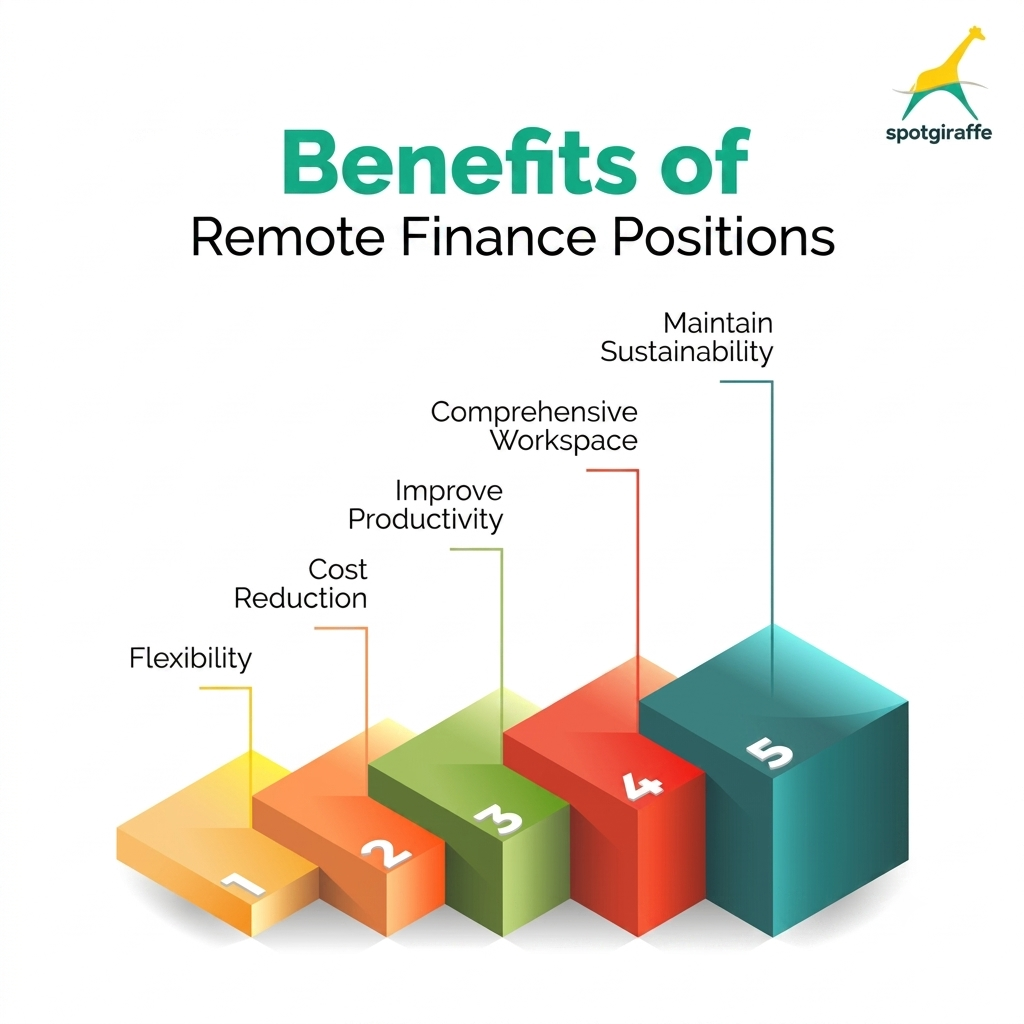
Benefits of Working Remotely in Finance
Remote work offers advantages beyond avoiding the daily commute.
Many professionals appreciate:
Better Work-Life Balance
Flexible schedules often make it easier to manage family responsibilities and personal commitments.
Wider Job Opportunities
You’re no longer limited to employers in your local city.
Many companies hire talent from across the country or internationally.
Lower Daily Expenses
Working from home may reduce spending on:
- Fuel
- Public transportation
- Parking
- Lunches
- Professional clothing
Greater Productivity
Many finance professionals report fewer workplace interruptions, allowing them to focus on detailed analytical work.
Career Flexibility
Remote experience can make it easier to transition between employers because many organizations now use similar digital workflows.
Challenges to Consider
Remote work isn’t perfect for everyone.
Some common challenges include:
Communication
Questions that once took a two-minute conversation may require scheduled meetings or written messages.
Strong communication skills become essential.
Self-Discipline
Without direct supervision, employees must manage deadlines independently.
Poor organization can quickly lead to missed work.
Data Security
Finance professionals handle highly sensitive information.
Employers often require:
- Secure internet connections
- Multi-factor authentication
- VPN access
- Company-managed devices
- Confidential document handling
Isolation
Some people miss the collaboration and social interaction of an office environment.
Hybrid work models help address this issue for many organizations.
Where to Find Legitimate Opportunities
Finding quality employers requires more than searching random job boards.
Reliable places include:
- Company career pages
- Professional networking platforms
- Accounting firm websites
- Financial services companies
- Industry-specific job boards
- Remote-focused employment websites
- Recruiting agencies specializing in finance
Always research the employer before accepting interviews or sharing personal information.
Be cautious of listings that:
- Promise unusually high salaries with little experience
- Ask for payment before hiring
- Request sensitive personal information too early
- Offer jobs without an interview
- Communicate only through messaging apps
Legitimate employers follow structured hiring processes.
How to Make Your Resume Stand Out
Hiring managers often receive hundreds of applications.
Instead of submitting a generic resume, tailor it to the specific position.
Highlight measurable achievements such as:
- Reduced reporting errors
- Improved financial processes
- Managed monthly reconciliations
- Supported successful audits
- Automated repetitive tasks
- Built forecasting models
- Reduced operating costs
Include software proficiency where appropriate.
Numbers help employers understand your impact more clearly than broad job descriptions.
Preparing for Remote Interviews
Finance interviews increasingly include questions about remote work habits.
Expect questions like:
- How do you organize your daily workload?
- How do you protect confidential financial information?
- Have you worked independently before?
- Which accounting software have you used?
- How do you communicate with managers and teammates remotely?
Employers want evidence that you can perform well without constant supervision.
Is This Career Path Right for You?
Working remotely suits people who enjoy focused, independent work and can stay organized without needing frequent direction.
It may be a good fit if you:
- Enjoy working with numbers
- Like solving analytical problems
- Meet deadlines consistently
- Communicate clearly
- Are comfortable using technology
- Value flexibility
On the other hand, if you prefer constant in-person collaboration or highly social workplaces, a fully remote role may feel limiting.
The Future of Finance Careers
Technology continues to reshape financial work.
Automation now handles many repetitive tasks, allowing professionals to spend more time on analysis, planning, and strategic decision-making.
Artificial intelligence, cloud accounting, digital payments, and advanced reporting tools are changing how finance teams operate. Rather than replacing skilled professionals, these technologies often increase demand for people who can interpret financial information, solve business problems, and communicate insights effectively.
As businesses become more comfortable with distributed teams, remote finance positions are likely to remain an important part of the employment market rather than a temporary trend.
Conclusion
The shift toward flexible work has created opportunities that were uncommon just a decade ago. Today’s finance professionals can build rewarding careers without being tied to a physical office, provided they have the right combination of technical knowledge, organization, and communication skills.
Whether you’re an experienced accountant looking for greater flexibility or a graduate starting your first finance career, remote finance positions offer a wide range of possibilities across industries. By developing relevant skills, staying current with financial software, and applying thoughtfully to reputable employers, you can improve your chances of finding a role that fits both your career goals and your preferred way of working.
FAQs
Q: Do remote finance jobs pay less than office jobs?
A: Not necessarily. Many employers offer similar salaries for remote and office-based roles. Compensation usually depends more on experience, responsibilities, industry, and location than where you work.
Q: Can someone start a remote finance career without experience?
A: Yes, although opportunities are more limited. Entry-level bookkeeping, payroll support, accounts payable, and junior accounting roles may be available to graduates or candidates with relevant training.
Q: Which software should finance professionals learn first?
A: Microsoft Excel remains one of the most valuable tools. Learning platforms like QuickBooks Online, Xero, SAP, NetSuite, or Oracle Financials can also improve employability.
Q: Are remote finance jobs secure?
A: They can be, especially with established companies. However, like any job, security depends on the employer’s financial health, your performance, and market conditions.
Q: Do remote finance professionals need a home office?
A: A quiet workspace, reliable internet connection, and secure computer are usually expected. Some employers provide equipment, while others expect employees to have their own setup.
Q: What is the biggest challenge of working remotely in finance?
A: Maintaining productivity while protecting confidential financial information is one of the biggest challenges. Strong organization, secure technology, and clear communication are essential for long-term success.
