
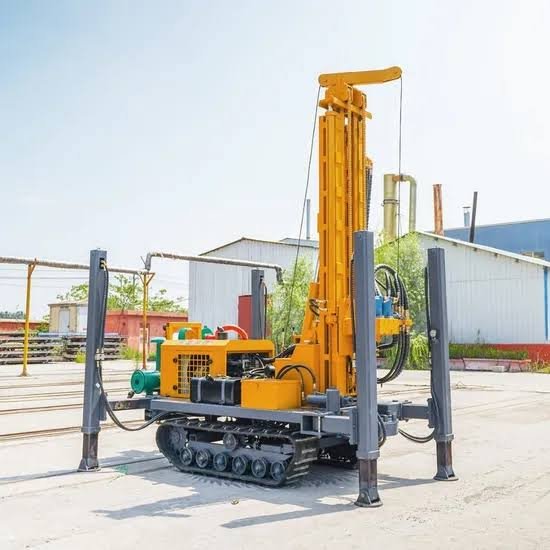
When people first come across the term well gantry, they’re often unsure what it refers to. It isn’t a household term, and depending on the industry, it may describe different types of lifting structures used around wells or drilling sites. Most commonly, it refers to a gantry-style framework designed to support the safe lifting, positioning, and handling of heavy equipment during well construction, maintenance, or servicing.
Because the phrase is relatively specialized, publicly available information is more limited than it is for common industrial equipment. However, the underlying engineering principles behind gantry systems are well understood across construction, oil and gas, water well drilling, and heavy industrial operations.
This guide explains what this equipment is, where it is used, how it works, and why it plays an important role in improving safety and efficiency.
What Is a Gantry System?
A gantry is a structural frame that supports lifting equipment such as a hoist, chain block, or overhead crane. Instead of relying on a building’s ceiling, the lifting mechanism is attached to a freestanding frame.
Gantry systems are commonly used when workers need to lift heavy objects in locations where permanent cranes are unavailable or impractical.
Typical gantry systems include:
- Two vertical support legs
- A horizontal beam across the top
- Wheels or fixed supports
- A lifting mechanism attached to the beam
Some are portable and can be moved around a worksite, while others are permanently installed for repeated use.
How the Structure Is Used Around Wells
In well operations, heavy components often need to be lifted with precision.
Examples include:
- Pumps
- Pipes
- Wellheads
- Casings
- Valves
- Downhole tools
- Maintenance equipment
Instead of relying on large mobile cranes for every task, crews may use a well gantry to create a controlled lifting point directly above or beside the work area.
This allows technicians to raise or lower equipment carefully while keeping loads stable.
The exact design varies depending on whether the work involves water wells, oil and gas wells, geothermal wells, or industrial facilities.
Why Lifting Equipment Matters During Well Maintenance
Working on wells involves much more than digging into the ground.
Many components weigh hundreds or even thousands of kilograms. Removing or installing them manually is impossible and often unsafe.
A properly designed lifting structure helps workers:
- Position equipment accurately
- Reduce manual handling
- Lower the risk of dropped loads
- Improve repair efficiency
- Support regular maintenance activities
Without suitable lifting equipment, even simple maintenance jobs can become slower, more expensive, and significantly more hazardous.
Common Industries That Use These Systems
Although people often associate wells with the oil industry, lifting frameworks are used in several sectors.
Oil and Gas
Oilfield maintenance frequently involves replacing valves, pumps, tubing, and production equipment.
Portable lifting frames allow crews to service wells without bringing in a large crane for every operation.
Water Well Services
Municipal water systems and private wells sometimes require pumps to be removed for repair or replacement.
Since deep-well pumps can be extremely heavy, technicians often rely on lifting systems to safely extract them.
Geothermal Projects
Geothermal wells require specialized equipment during installation and maintenance.
Lifting structures assist crews when handling piping, pumps, and other heavy components.
Industrial Facilities
Factories and utility sites sometimes have underground wells or access shafts that require periodic servicing.
Compact gantry systems are useful in confined work areas where traditional cranes cannot easily operate.
Main Components of a Typical Setup
While designs vary, most systems include several core parts.
Main Beam
The top beam carries the weight of the suspended load.
Its strength determines how much weight the structure can safely support.
Support Legs
Vertical legs transfer the load safely to the ground.
Some models have adjustable heights to accommodate different work environments.
Hoist
The hoist performs the actual lifting.
It may be:
- Manual chain hoist
- Electric hoist
- Pneumatic hoist
- Hydraulic lifting mechanism
The choice depends on the working environment and lifting requirements.
Base or Wheels
Some gantries are fixed permanently.
Others include heavy-duty wheels that allow workers to reposition the structure between lifting locations.
Portable vs Permanent Installations
Choosing between portable and permanent equipment depends on operational needs.
Portable Systems
Advantages include:
- Easy transportation
- Flexible positioning
- Lower installation costs
- Useful for field maintenance
These are popular among service crews that work at multiple locations.
Permanent Systems
Permanent installations are often found in facilities where lifting operations occur regularly.
Benefits include:
- Greater stability
- Higher lifting capacities
- Reduced setup time
- Long-term reliability
They are commonly installed in maintenance buildings, treatment plants, and industrial sites.
Important Safety Considerations
Heavy lifting always involves risk.
Even well-designed equipment can become dangerous if used incorrectly.
Operators should always pay attention to:
- Load capacity limits
- Ground stability
- Proper rigging techniques
- Regular equipment inspections
- Hoist maintenance
- Worker training
- Safe communication between team members
Ignoring any of these factors increases the likelihood of accidents.
Most workplaces also follow national lifting regulations and industry safety standards to reduce operational risks.
How Engineers Determine the Right System
Selecting lifting equipment is not simply a matter of choosing the strongest frame available.
Engineers consider factors such as:
- Maximum load weight
- Lift height
- Available working space
- Ground conditions
- Frequency of use
- Environmental conditions
- Mobility requirements
- Budget
For example, a rural water well service company may prioritize portability, while a large industrial facility may invest in a permanent installation capable of handling heavier loads every day.
Don’t Miss Out: Learn about inhouse vehicle finance
Materials Used in Construction
Most lifting frames are built from structural steel because it offers excellent strength and durability.
Depending on the environment, manufacturers may also use:
- Galvanized steel for corrosion resistance
- Powder-coated finishes
- Stainless steel for harsh environments
- High-strength alloy components
Protective coatings are especially important when equipment operates outdoors or near saltwater.
Maintenance Requirements
Like any lifting equipment, gantry systems require regular inspections.
Routine maintenance often includes:
- Checking bolts and welds
- Inspecting beams for deformation
- Lubricating moving parts
- Examining wheels and bearings
- Testing hoists
- Replacing worn lifting chains
- Inspecting hooks and safety latches
Preventive maintenance helps identify small problems before they become serious safety issues.
Many organizations also maintain inspection records to comply with workplace safety requirements.
Advantages of Using Dedicated Lifting Structures
Using equipment designed specifically for controlled lifting offers several practical benefits.
These include:
- Better load control
- Improved worker safety
- Reduced physical strain
- Faster maintenance operations
- Increased precision
- Lower dependence on large cranes
- Improved access in confined work areas
These advantages can translate into reduced downtime and more efficient maintenance schedules.
Are There Any Limitations?
No lifting solution is perfect.
Portable systems may have lower lifting capacities than fixed industrial cranes.
Other limitations include:
- Limited operating height
- Ground preparation requirements
- Weather-related restrictions
- Space needed for safe positioning
- Capacity limits for very large equipment
For extremely heavy industrial lifts, larger crane systems may still be the better option.
Why the Term Can Be Confusing
One reason people struggle to find information is that the phrase well gantry is not always used consistently.
Some manufacturers describe their products using terms such as:
- Portable gantry crane
- Well service gantry
- Maintenance gantry
- Lifting frame
- Service lifting structure
Different industries may use different terminology even when referring to equipment that performs similar functions.
As a result, search results often vary depending on whether you’re researching water wells, oilfields, mining operations, or industrial maintenance.
Is It a Product or a General Engineering Term?
In most cases, the phrase refers to a category of equipment rather than one specific product or brand.
Manufacturers produce lifting frames in many sizes, load ratings, and configurations to suit different applications.
If you’re purchasing one for a project, it’s more useful to focus on technical specifications—such as lifting capacity, span width, height adjustment, and mobility—than on the name alone.
Conclusion
Although the term may not be familiar outside technical industries, the well gantry serves an important purpose wherever heavy well equipment must be lifted safely and accurately. By providing a stable overhead lifting point, it helps technicians handle pumps, pipes, valves, and other components with greater control while reducing physical strain and improving workplace safety.
Since the exact design depends on the type of well and the work being performed, there is no single standard configuration. If you’re researching or purchasing one, reviewing the manufacturer’s specifications and ensuring the equipment matches your lifting requirements is far more valuable than relying on the name alone.
FAQs
Q: What is a well gantry?
A: It generally refers to a gantry-style lifting structure used to support the safe handling of heavy equipment during well construction, servicing, or maintenance. The exact design varies by industry and application.
Q: Is a gantry the same as a crane?
A: Not exactly. A gantry supports lifting equipment such as a hoist, while a crane is a broader category of lifting machinery. Gantry systems are one type of lifting solution.
Q: Where are these lifting systems commonly used?
A: They are used in oil and gas operations, water well maintenance, geothermal projects, utility facilities, and other industrial environments where heavy equipment must be lifted safely.
Q: Can a portable gantry handle heavy loads?
A: Yes, many portable models are designed for substantial loads, but every system has a maximum rated capacity that must never be exceeded.
Q: Why do technicians use lifting structures instead of manual lifting?
A: Heavy well components are often far too large and heavy to move safely by hand. Mechanical lifting improves precision, reduces injury risks, and makes maintenance more efficient.
Q: Is information about this equipment limited?
A: Yes. The phrase is relatively specialized, and different industries often use different names for similar lifting systems. Because of that, publicly available information can be limited, and terminology may vary between manufacturers.
