
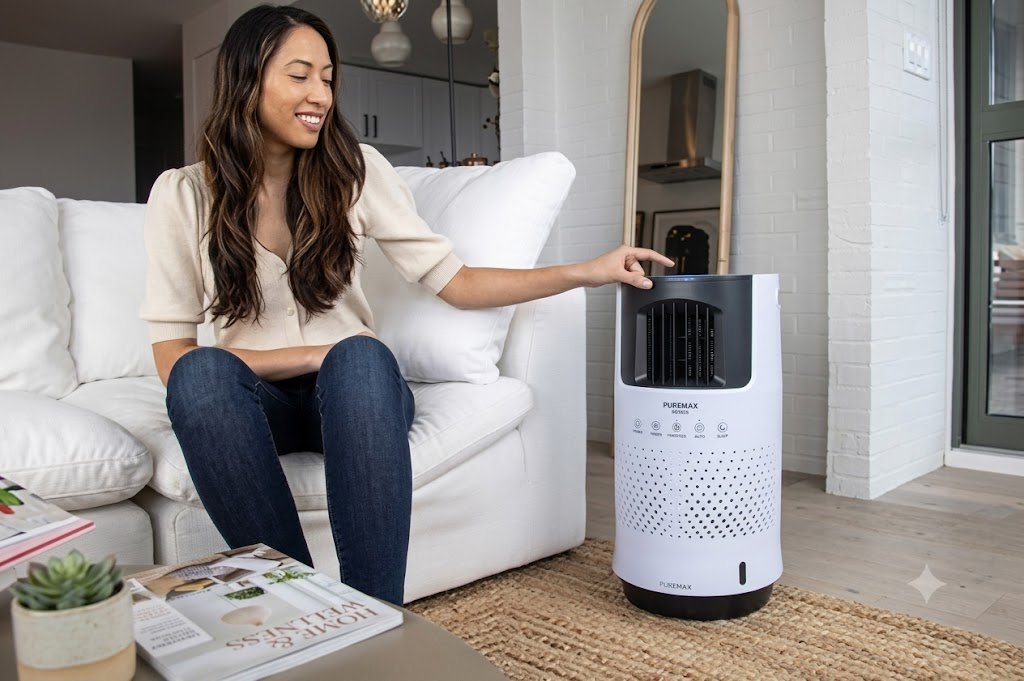
When searching online for briza ac reviews, you’ll quickly notice that opinions are mixed. Some users appreciate its portability and ease of installation, while others have questions about cooling performance, noise levels, and whether it’s the right choice for larger rooms.
This guide takes a practical approach. Instead of relying on marketing claims, we’ll explain what Briza AC is, how it works, where it performs well, and the situations where it may not be the ideal solution. If you’re considering buying one, understanding these details can help you make a better decision.
What is Briza AC?
Briza AC is a portable air conditioning solution designed for people who want temporary or movable cooling without installing a permanent HVAC system.
Unlike traditional window-mounted or central air conditioning units, portable ACs are built to move between rooms. Most models include wheels, making it easy to relocate them wherever cooling is needed.
Portable air conditioners generally work best for:
- Apartments where permanent installation isn’t allowed
- Bedrooms
- Home offices
- Dorm rooms
- Rental properties
- Small living spaces
The exact specifications of Briza AC may vary depending on the retailer or model being sold, so it’s important to verify product details before purchasing.
How Does a Portable Air Conditioner Work?
Understanding how a portable AC works helps set realistic expectations.
The process is fairly straightforward:
- The unit pulls warm indoor air into the machine.
- Internal refrigeration components remove heat from that air.
- Cool air is blown back into the room.
- The captured heat is expelled outside through an exhaust hose connected to a window.
This exhaust hose is extremely important. Without proper ventilation, the unit cannot cool efficiently because the heat remains inside the room.
Some models also collect moisture during operation, while others evaporate much of the water automatically.
Who is Briza AC Best Suited For?
Portable air conditioners aren’t designed for every situation.
Briza AC is generally more appropriate for users who need flexible cooling rather than whole-house climate control.
It may be suitable for:
- People renting apartments
- Students living in dormitories
- Individuals who only need one room cooled
- Home office users
- People looking for seasonal cooling
It may be less suitable for:
- Very large open-plan homes
- Multi-room cooling
- Entire apartments
- Commercial spaces
- Areas with poor window ventilation options
Choosing the correct room size is often more important than choosing the brand itself.
Installation Is Usually Simple
One advantage of portable air conditioners is that installation doesn’t usually require professional help.
Most units include:
- Window vent kit
- Exhaust hose
- Power cable
- User manual
Installation generally involves:
- Positioning the unit near a window.
- Connecting the exhaust hose.
- Attaching the window kit.
- Plugging the unit into a suitable electrical outlet.
Many users complete setup within half an hour.
Cooling Performance: What Can You Realistically Expect?
This is where many buyers become disappointed—not necessarily because the product is poor, but because expectations are unrealistic.
Portable air conditioners are designed to cool limited spaces.
Performance depends on several factors:
- Room size
- Outdoor temperature
- Sunlight entering the room
- Ceiling height
- Insulation quality
- Door openings
- Window sealing
For example:
A small bedroom with closed doors and curtains will usually cool much faster than a large living room with several windows exposed to afternoon sunlight.
If you’re expecting the entire house to become cold from one portable unit, you’ll probably be disappointed regardless of the brand.
Noise Levels
Portable AC units contain:
- Compressor
- Cooling fan
- Internal airflow system
Because these components are inside the room, they naturally produce more sound than central air conditioning systems.
Most users describe portable AC noise as similar to:
- White noise
- A box fan
- A window air conditioner
Some people actually prefer this background sound while sleeping, while others may find it distracting.
If noise is a major concern, checking the manufacturer’s published decibel rating can provide a better comparison between models.
Energy Consumption
Portable air conditioners generally consume more electricity than fans because they actively remove heat instead of simply circulating air.
Actual energy usage depends on:
- BTU rating
- Cooling mode
- Fan speed
- Daily operating hours
- Room insulation
Using the unit efficiently can reduce operating costs.
Helpful habits include:
- Closing windows while cooling
- Keeping doors shut
- Using blackout curtains
- Cleaning air filters regularly
- Turning off unnecessary heat-producing electronics
These small adjustments can noticeably improve efficiency.
Maintenance Requirements
Routine maintenance is fairly simple.
Most portable ACs require:
Cleaning the Air Filter
Dust buildup reduces airflow.
Many manufacturers recommend cleaning filters every few weeks during heavy use.
Emptying Condensation
Some models collect water in an internal tank.
Others use self-evaporative technology that minimizes manual draining.
High humidity environments may require more frequent drainage.
Inspecting the Exhaust Hose
A damaged or poorly connected hose can reduce cooling performance because warm air leaks back into the room.
Checking connections periodically helps maintain efficiency.
Keep Reading: meaningful cross wall decor ideas
Common Advantages Buyers Mention
People who purchase portable air conditioners often appreciate several practical benefits.
These commonly include:
- Easy movement between rooms
- No permanent installation
- Suitable for renters
- Faster setup than window units
- Cooling where it’s actually needed
- Compact footprint
- Seasonal storage convenience
For users without central air conditioning, these advantages can be significant.
Potential Drawbacks Worth Considering
No cooling solution is perfect.
Portable AC units typically come with a few compromises.
Some limitations include:
- Louder operation than split systems
- Occupies floor space
- Requires window access
- Exhaust hose can be visually noticeable
- Less effective for large areas
- Higher energy use than standard fans
These aren’t unique to Briza AC they’re common characteristics of portable air conditioners in general.
What Do Customers Commonly Say?
Looking across online discussions and customer feedback, several themes appear repeatedly in briza ac reviews.
Positive experiences often mention:
- Convenient portability
- Straightforward installation
- Effective cooling in smaller rooms
- Good option for apartments
- Useful during hot summer months
Critical feedback sometimes mentions:
- Noise during compressor operation
- Expectations of cooling larger spaces
- Room size mismatches
- Occasional maintenance requirements
It’s important to remember that customer experiences often depend on how the unit is used.
A correctly sized portable AC in a well-insulated bedroom may perform very differently from the same unit placed in a large open living area.
How Does It Compare With Other Cooling Options?
Choosing between different cooling systems depends on your priorities.
| Cooling Option | Best For | Main Limitation |
| Portable AC | Single-room cooling | Louder operation |
| Window AC | Permanent room cooling | Requires window installation |
| Split AC | Whole-room efficiency | Higher installation cost |
| Tower Fan | Air circulation | Doesn’t actually cool the air |
| Ceiling Fan | Everyday comfort | Cannot reduce room temperature |
There’s no universally “best” option—only the one that fits your space and budget.
Things to Check Before Buying
Before purchasing any portable air conditioner, consider these questions:
- How large is the room?
- Does the room have a compatible window?
- Will the unit need to move between rooms?
- Is noise an important concern?
- What’s the local climate like?
- Will the unit run daily or occasionally?
- Is storage space available during winter?
Answering these questions often leads to a better buying decision than focusing only on brand names.
Should You Buy Briza AC?
Whether Briza AC is worth buying depends largely on your needs.
It may be a sensible choice if you:
- Need portable cooling
- Rent your home
- Want easy installation
- Plan to cool one room
- Don’t want permanent modifications
It may not be the best option if you expect:
- Whole-house cooling
- Extremely quiet operation
- Permanent HVAC-level performance
- Cooling for very large spaces
Setting realistic expectations is often the biggest factor in customer satisfaction.
Final Thoughts
Portable air conditioners solve a very specific problem: providing flexible cooling where permanent installation isn’t practical.
After examining available information and general customer experiences, briza ac reviews suggest that satisfaction depends more on proper use than on unrealistic expectations. Buyers who match the unit to the correct room size and install it properly are generally more likely to have a positive experience than those expecting central-air performance from a portable appliance.
If you’re shopping for a portable AC, compare cooling capacity, room size recommendations, energy efficiency, warranty terms, and verified customer feedback before making your final decision. Doing a little research beforehand can save both money and frustration later.
FAQs
Q: Is Briza AC a real portable air conditioner?
A: It is marketed as a portable air conditioning solution. However, product specifications may differ depending on the retailer or model, so always verify the official details before purchasing.
Q: Can Briza AC cool an entire house?
A: No. Portable air conditioners are generally intended to cool individual rooms rather than whole homes.
Q: Does it require installation?
A: Basic installation is usually required. Most portable units need an exhaust hose connected to a window so hot air can be vented outside.
Q: Is Briza AC noisy?
A: Like most portable air conditioners, it produces some compressor and fan noise. The exact sound level depends on the specific model and operating mode.
Q: Does it need regular maintenance?
A: Yes. Cleaning the air filter, checking the exhaust hose, and occasionally draining collected water (if required) are standard maintenance tasks.
Q: Is a portable AC better than a fan?
A: A portable air conditioner actually removes heat from the room, while a fan only circulates existing air. This means a portable AC can lower room temperature, whereas a fan cannot.
