
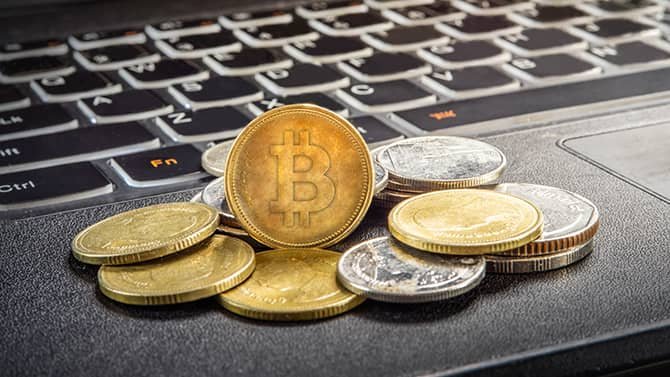
I still remember the first time someone tried explaining Bitcoin to me. I nodded along like I understood, but honestly? I had zero clue what they were talking about. “Digital money that lives on the internet” — okay, but how? And why does it cost so much to buy one coin?
If you’ve ever felt that same confusion, you’re not alone. Cryptocurrency is one of those topics where the more you try to Google it, the more lost you get. So let me break it down the way I wish someone had for me — no jargon walls, no confusing textbook stuff.
So, What Actually Is Cryptocurrency?
At its core, cryptocurrency is money that exists digitally — but not the kind your bank holds for you. There’s no central authority like a government or bank controlling it. No one “prints” it. And you can’t stuff it under your mattress.
The word itself comes from “cryptography” — the science of securing information. That’s what keeps these digital coins from being faked or stolen. The “currency” part? Well, that’s because people use it to buy things, trade, and store value — just like regular money, but without the middlemen.
Bitcoin was the first one, launched back in 2009 by someone (or a group) using the name Satoshi Nakamoto. Nobody knows who that actually is. Wild, right? And yet it became the foundation of an entirely new financial system.
How Does It Actually Work?
This is where it gets genuinely interesting.
The Blockchain: Think of It Like a Public Notebook
Imagine a notebook that records every single transaction ever made — and thousands of people have an identical copy of it. If someone tries to erase or fake a transaction, the other copies immediately catch the lie. That’s basically what a blockchain is.
Every time you send cryptocurrency to someone, that transaction gets added to a “block.” That block is then linked to the previous one, forming a chain. Hence — blockchain. It’s not stored in one place. It’s distributed across thousands of computers worldwide. Nobody owns it. Nobody can shut it down easily.
That decentralization is kind of the whole point.
Mining: Where New Coins Come From
So who adds those blocks to the chain? Miners. Not the guys with pickaxes — we’re talking about computers solving incredibly complex math problems. When a computer solves one, it gets to add the next block and earns some cryptocurrency as a reward.
It’s competitive, energy-intensive, and honestly, a bit chaotic. But it’s also what keeps the system running and trustworthy without needing a bank to oversee things.
Wallets and Private Keys
You don’t hold cryptocurrency in a bank account. You hold it in a digital wallet — which is really just software (or a hardware device) that stores your private key. That private key is basically your password to access your coins. Lose it and your crypto is gone forever. No reset option. No customer support to call.
That part still makes me nervous, not going to lie.
Why Do People Even Use It?
Honestly, different people have different reasons.
Some use it because they don’t trust traditional banks — especially in countries where the banking system is unstable or the local currency keeps losing value. For them, holding digital assets feels safer.
Others use it to send money internationally without paying ridiculous transfer fees. If you’ve ever tried wiring money abroad, you know those fees can sting. With crypto, you can send funds across the world in minutes for a fraction of the cost.
And then there’s the investment crowd. People who bought Bitcoin early and became millionaires. People who also lost everything when prices crashed. It’s volatile — like, really volatile. One tweet from a celebrity can swing the market 20% in a day. That’s not exaggeration. That’s literally happened.
Different Types of Cryptocurrencies
Bitcoin gets all the headlines, but it’s not the only one.
Altcoins
Anything that isn’t Bitcoin gets lumped under “altcoins.” Ethereum is the biggest one — and it’s actually quite different from Bitcoin. Ethereum isn’t just money. It’s a platform where developers can build decentralized apps and smart contracts (self-executing agreements written in code).
Then there’s Litecoin, Ripple, Cardano, Solana — each one with slightly different goals, speeds, and use cases. Some are trying to be faster. Some are trying to be greener. Some are honestly just riding hype.
Stablecoins
These are pegged to real-world assets like the US dollar. So 1 USDT (Tether) is always meant to be worth $1. They’re popular for people who want to stay in the crypto world without the price swings.
Memecoins
Dogecoin started as a joke. A literal internet meme. And at its peak, it had a market cap in the billions. Make that make sense. But it did — and that tells you something about how sentiment-driven this market really is.
Also Read: What Pedro Vaz Paulo Actually Gets About Crypto Investment
Is It Safe? And Is It Legal?
Two fair questions.
Safety-wise — the technology itself is pretty solid. Blockchains are hard to hack. But the things around crypto? Exchanges get hacked. Scammers run fake projects. People lose wallets. So it’s less about whether crypto is safe and more about whether you’re being careful with how you use it.
Legally, it depends entirely on where you live. Some countries have fully embraced it. Others have banned it outright. In most places, it sits in a grey zone — allowed, but not always regulated clearly. Tax rules especially can get complicated, since many governments consider crypto a taxable asset.
The Part Nobody Talks About Enough
Here’s my honest take — cryptocurrency is genuinely exciting technology. The idea of financial systems that don’t need banks, contracts that execute themselves, and money that can’t be inflated away by government policy? That’s actually revolutionary stuff.
But there’s a lot of noise too. A lot of projects that are essentially get-rich-quick schemes dressed up in tech language. A lot of influencers pushing coins they quietly sold before the price tanked.
If you’re exploring this space, go slowly. Learn before you invest. Don’t put in more than you’re willing to lose. And be skeptical of anyone promising guaranteed returns — that’s not how any investment works, and crypto is no exception.
Conclusion
Cryptocurrency isn’t going away. Whether it becomes the future of finance or remains a niche alternative, understanding how it works puts you in a much better position — whether you want to invest, use it, or just stop nodding blankly when people bring it up.
It’s not magic. It’s not a scam (well, some of it is). But mostly, it’s just a genuinely new way of thinking about money — and that’s worth understanding, even if you never buy a single coin.
FAQs
Q: Do I need a lot of money to start with cryptocurrency?
Nope. Most exchanges let you buy a fraction of a coin. You could start with $10 if you wanted. The barrier to entry is actually pretty low — it’s more about the learning curve than the money.
Q: Can cryptocurrency be converted to regular cash?
Yes, absolutely. You can sell your crypto on an exchange and withdraw the money to your bank account. It’s not always instant, but it’s not complicated either.
Q: What happens if I lose my wallet password?
Unfortunately, if you lose your private key or recovery phrase, your funds are gone. There’s no account recovery process like you’d have with a regular bank. That’s why secure storage matters so much.
Q: Is cryptocurrency the same as NFTs?
They’re related but different. Crypto is digital currency. NFTs (non-fungible tokens) are unique digital assets — like art, music, or collectibles — that use the same blockchain technology but aren’t interchangeable the way currency is.
Q: Why does the price of Bitcoin change so much?
Supply and demand, mostly — but also speculation, news events, regulations, and market sentiment. It’s a young, thinly regulated market, which means prices can swing dramatically on relatively small events.
