
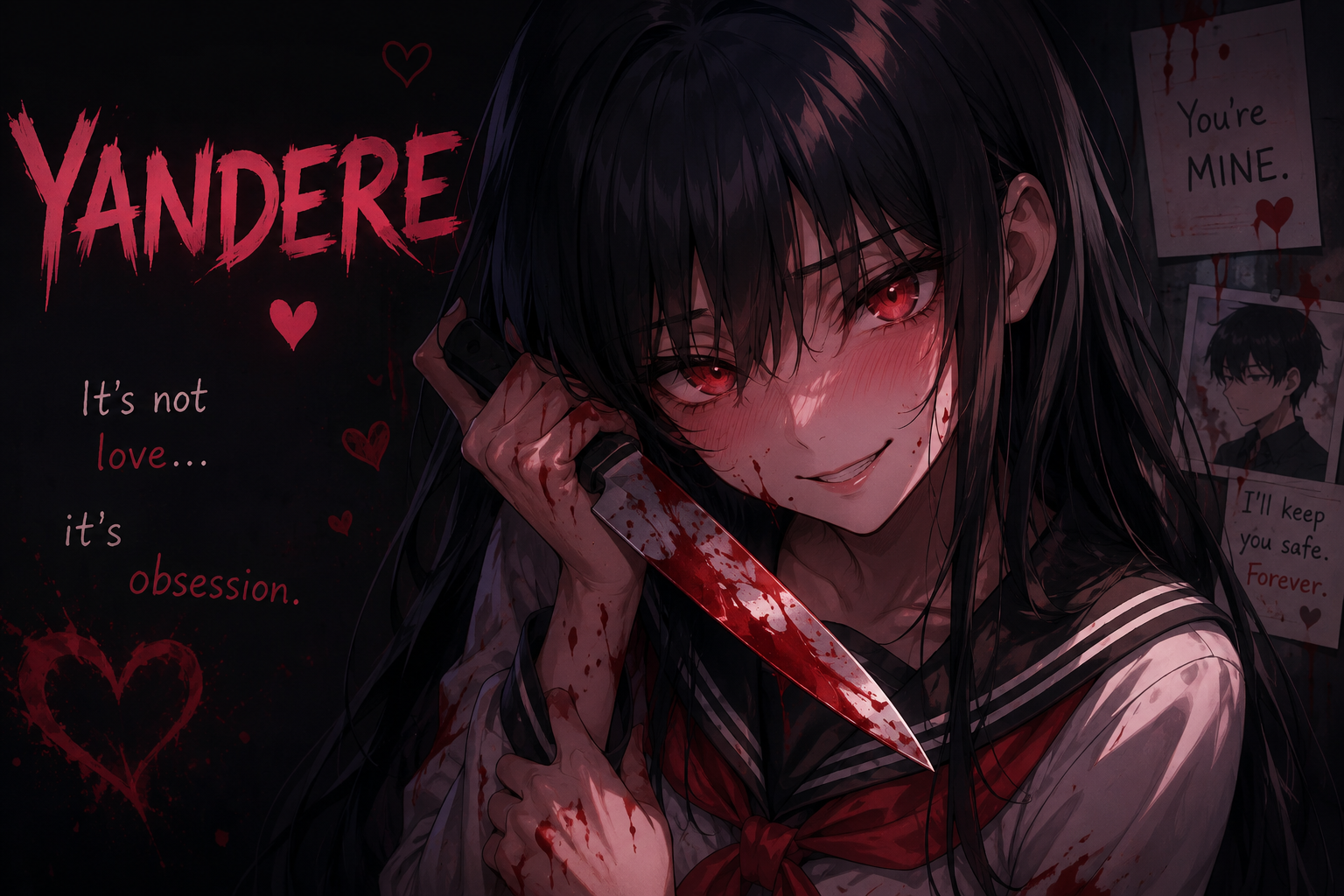
Some fictional characters are easy to understand. They’re brave, funny, or kind, and their personalities follow patterns that most viewers recognize immediately.
Then there are the characters who seem loving one moment and frightening the next.
That contrast is exactly why this character archetype has remained one of the most discussed topics in anime and manga communities for years. Whether someone encounters it through a popular television series, a visual novel, or online fan discussions, curiosity usually leads to the same question: what makes these characters so compelling?
The term yande re is often searched by new anime fans who want to understand where this archetype came from and why it continues appearing in modern Japanese entertainment. While the spelling may vary because of typing mistakes or search habits, the concept itself has become well known across anime culture.
Rather than simply describing these characters as “crazy,” it’s more accurate—and much more interesting—to look at the psychology, storytelling, and cultural appeal behind them.
More Than Just an Obsessive Love Interest
At its core, this archetype describes a character whose affection becomes unhealthy or dangerously obsessive.
The personality often begins with someone who appears gentle, caring, affectionate, or even shy. As the story develops, however, that love transforms into possessiveness, jealousy, or extreme emotional dependence.
The important point is that these characters are usually driven by intense emotions rather than simple cruelty.
Their actions may become manipulative or violent, but the motivation is almost always tied to an overwhelming fear of losing the person they love.
Because of this emotional complexity, audiences often find them fascinating even when they strongly disagree with the character’s choices.
Where the Idea Came From
The concept became popular through Japanese visual novels, dating simulation games, and anime during the early 2000s.
The name itself combines two Japanese ideas:
- One refers to being emotionally or mentally unwell.
- The other refers to being lovestruck or deeply affectionate.
Together, they describe someone whose love has crossed healthy emotional boundaries.
Although similar personalities appeared in older stories, the label became widely recognized through internet forums and anime communities before spreading internationally.
Today, it’s part of everyday vocabulary among many anime fans.
Why These Characters Stand Out
Stories often rely on predictable personalities.
This archetype breaks those expectations.
Instead of knowing exactly how a character will react, viewers experience constant uncertainty. A sweet conversation can suddenly become tense because emotional instability changes the direction of the scene.
That unpredictability creates suspense.
Writers also use these characters to explore themes like:
- Emotional dependency
- Fear of abandonment
- Loneliness
- Trauma
- Jealousy
- Unhealthy relationships
- Identity and self-worth
When written well, the result isn’t simply shocking behavior. It’s a study of emotions pushed far beyond healthy limits.
Common Personality Traits
Not every character follows the same formula, but many share recognizable characteristics.
They often display:
- Extreme devotion toward one person.
- Strong jealousy when rivals appear.
- Difficulty accepting rejection.
- Emotional instability.
- Possessive behavior disguised as affection.
- A willingness to sacrifice almost anything for the relationship.
Interestingly, many stories introduce these traits gradually.
At first, the audience may not notice anything unusual.
Only later do subtle warning signs become impossible to ignore.
That slow transformation is often what makes these characters memorable.
Why Audiences Find Them Interesting
People sometimes assume fans admire this archetype because they support unhealthy relationships.
That’s usually not the case.
Most viewers enjoy these characters for the same reason they appreciate compelling villains or morally complex antiheroes—they’re dramatically entertaining.
Several factors contribute to their popularity.
Emotional intensity
Many fictional romances move slowly or predictably.
An obsessive character immediately raises the emotional stakes.
Every interaction feels important because the consequences can become serious.
Psychological mystery
Viewers naturally wonder what caused the character’s emotional state.
Was it childhood trauma?
Isolation?
Loss?
Mental illness?
These questions encourage deeper engagement with the story.
Unpredictable storytelling
When a character’s emotional reactions are difficult to predict, scenes become more suspenseful.
Audiences keep watching because they genuinely don’t know what will happen next.
Memorable character design
Many creators pair emotionally complex personalities with distinctive visual designs and expressive facial animations.
The contrast between an innocent appearance and dangerous behavior often becomes instantly recognizable.
Fiction Versus Reality
One important distinction is often overlooked.
These characters exist to create dramatic fiction.
Their behavior should not be interpreted as a model for healthy relationships.
Real relationships depend on trust, communication, mutual respect, and personal boundaries.
Obsessive control, manipulation, threats, stalking, or violence are signs of unhealthy behavior—not romance.
Many modern discussions within anime communities acknowledge this difference, appreciating the fictional storytelling while recognizing that real-life relationships require entirely different standards.
Famous Examples in Anime and Games
Several well-known characters helped popularize this archetype across different generations of anime fans.
Some frequently discussed examples include:
- Yuno Gasai
- Kotonoha Katsura
- Shion Sonozaki
- Satou Matsuzaka
Each character approaches the archetype differently.
Some become violent.
Others rely on emotional manipulation.
Some simply struggle with overwhelming attachment while never becoming physically dangerous.
This variety prevents the trope from feeling completely identical across different stories.
Keep Reading: Best manga reading platform
Not Every Character Fits Perfectly
Fans often debate whether certain characters truly belong in this category.
That’s because personality traits exist on a spectrum.
A jealous character isn’t automatically obsessive.
Someone protective isn’t necessarily emotionally unstable.
Likewise, a tragic backstory alone doesn’t define the archetype.
Many discussions online revolve around where these boundaries should be drawn.
Those debates continue because writers frequently blend multiple personality archetypes together instead of following strict definitions.
Similar Archetypes People Often Confuse
Anime includes many recurring personality types, and newcomers sometimes mix them together.
Here are a few examples:
Tsundere
These characters hide affection behind cold or argumentative behavior before gradually becoming more open emotionally.
Kuudere
Calm, quiet, and emotionally reserved, they rarely display dramatic emotional swings.
Dandere
Typically shy and socially anxious rather than emotionally unstable.
Yangire
Although sometimes confused with this archetype, the distinction is important. A yangire character becomes violent because of psychological instability or other reasons that aren’t necessarily connected to romantic love.
Understanding these differences helps viewers better appreciate how writers build distinct personalities.
Has the Trope Changed Over Time?
Yes.
Earlier portrayals often relied on shock value.
The focus was usually on surprising the audience with sudden violence or disturbing behavior.
More recent anime sometimes explores the emotional causes behind the obsession in greater depth.
Instead of presenting characters as simply “insane,” modern writers may examine trauma, neglect, emotional dependency, or mental health more thoughtfully.
Not every series succeeds, but the trend reflects broader changes in storytelling across anime.
Why Internet Culture Keeps Reviving It
Social media has given these characters an entirely new audience.
Short video edits, memes, reaction images, fan art, and cosplay regularly introduce the archetype to viewers who may never have watched the original series.
As a result, interest continues long after older anime stop airing.
However, online memes sometimes oversimplify these characters, reducing them to jokes about obsession while ignoring the deeper psychological themes present in many stories.
Should New Anime Fans Watch Series Featuring This Archetype?
That depends on personal taste.
Someone who enjoys psychological thrillers, mystery, horror, or morally complicated characters may find these stories engaging.
On the other hand, viewers looking for lighthearted romance or relaxing slice-of-life series might find the emotional intensity uncomfortable.
It’s also worth checking content warnings before starting certain shows, since some include graphic violence, emotional abuse, or disturbing themes.
Knowing what to expect helps viewers choose stories that match their preferences.
Is the Archetype Still Popular?
Absolutely.
Although trends in anime constantly evolve, emotionally complex characters remain popular because they generate discussion.
Fans continue debating motivations, favorite portrayals, psychological realism, and character rankings years after many series have ended.
Writers also keep reinventing the concept by mixing it with comedy, fantasy, science fiction, supernatural settings, or even action stories.
That flexibility has helped the archetype remain relevant for decades.
Final Thoughts
Anime thrives on memorable personalities, and few are more unforgettable than the obsessive lover archetype. Whether someone discovers the idea through classic series or newer releases, it offers an interesting lens for exploring emotional extremes in fiction.
The phrase yande re has become widely recognized among anime fans because it represents more than a stereotype. At its best, it encourages conversations about psychology, storytelling, and the difference between fictional drama and healthy real-world relationships. Approached with that perspective, it remains one of anime’s most enduring and thought-provoking character concepts.
FAQS
Q:Is this character archetype based on real psychological conditions?
A: Not directly. While writers may borrow ideas from psychology, these characters are fictional creations designed for dramatic storytelling rather than accurate medical representation.
Q:Is every obsessive anime character considered yande re?
A: No. Obsession alone isn’t enough. Fans generally look for a combination of deep romantic attachment and emotionally unstable behavior before using the label.
Q:Why do people enjoy these characters?
A: Many viewers appreciate the suspense, emotional complexity, and unpredictable storytelling they bring to fictional narratives rather than seeing them as role models.
Q:Are these characters always villains?
A: No. Some are antagonists, while others remain protagonists or supporting characters. Their role depends entirely on the story the creator wants to tell.
