
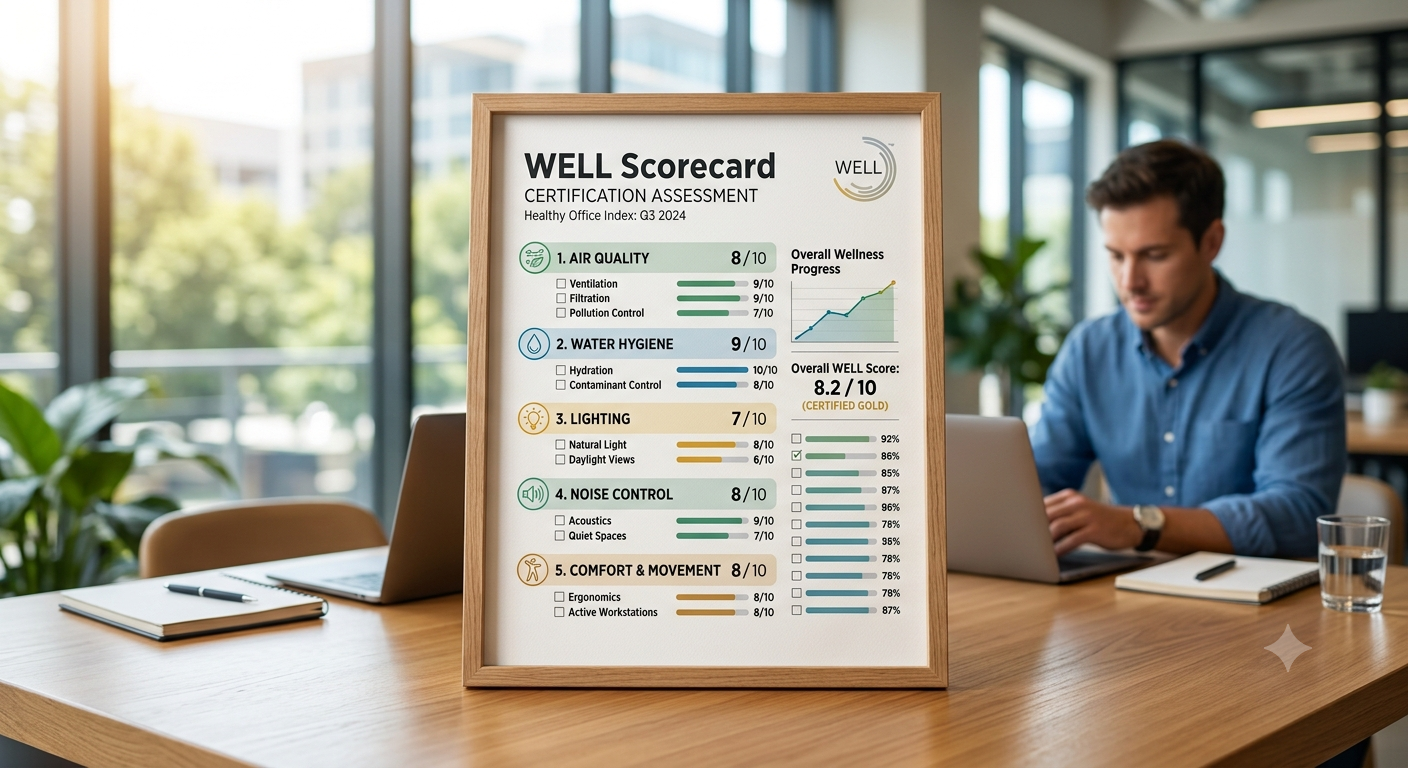
When people talk about healthy buildings, they often focus on energy efficiency or modern design. But a truly high-performing building goes further. It supports the health, comfort, and productivity of the people who use it every day.
This is where the well scorecard comes into the conversation. Rather than being a simple checklist, it helps organize and measure how well a building aligns with recognized health and wellness principles. Property owners, facility managers, architects, and organizations use it to evaluate different aspects of indoor environments and identify opportunities for improvement.
If you’ve come across the term and wondered what it actually means, this guide explains it in practical language, how it’s used, and why it matters in today’s building industry.
What Is a Well Scorecard?
A well scorecard is a structured assessment tool used during the planning, construction, or operation of buildings that aim to meet wellness-focused building standards.
Instead of concentrating only on structural quality or environmental performance, it looks at factors that directly influence occupants’ daily experiences. These include indoor air quality, access to natural light, thermal comfort, water quality, movement, nourishment, acoustics, and other human-centered design elements.
Think of it as a roadmap rather than a final grade. It helps project teams understand which health-focused requirements have already been met and which areas still need attention.
The exact format can vary depending on the certification process or assessment framework being used.
Why Healthy Buildings Have Become More Important
Over the past decade, businesses and property owners have begun paying much closer attention to indoor environments.
Several factors contributed to this shift:
- Employees spend much of their day indoors.
- Remote work increased expectations for comfortable workspaces.
- Organizations recognize the connection between workplace quality and productivity.
- Public awareness of indoor air quality has grown significantly.
As a result, building performance is no longer judged only by energy savings or appearance. Human well-being has become an important part of modern building design.
Assessment tools help make these goals measurable instead of relying on assumptions.
What Does a Building Assessment Usually Measure?
Although every project is different, most wellness assessments examine similar categories.
Indoor Air Quality
Clean indoor air is one of the most important factors affecting occupant health.
Assessment teams often evaluate:
- Ventilation systems
- Air filtration
- Pollutant control
- Carbon dioxide levels
- Maintenance practices
Good air quality may help create a more comfortable indoor environment and reduce common complaints related to stale air.
Water Quality
Access to safe drinking water is another important consideration.
Projects may review:
- Water testing procedures
- Filtration systems
- Drinking water availability
- Maintenance schedules
Rather than assuming water quality remains constant, regular monitoring is usually encouraged.
Lighting
Lighting affects much more than visibility.
Modern workplace design considers:
- Natural daylight
- Artificial lighting quality
- Glare reduction
- Circadian lighting strategies
- Visual comfort
Good lighting can improve comfort throughout the workday while supporting different work activities.
Thermal Comfort
People work best when indoor temperatures remain comfortable.
Assessment criteria may include:
- Heating performance
- Cooling systems
- Humidity control
- Individual temperature adjustments where possible
Since comfort varies from person to person, flexible systems often perform better than one-size-fits-all approaches.
Noise and Acoustics
Excessive noise affects concentration.
Healthy buildings often examine:
- Background noise
- Meeting room privacy
- Sound insulation
- Echo reduction
- Workspace acoustics
Small improvements in acoustics can noticeably improve workplace satisfaction.
Movement and Physical Activity
Modern buildings increasingly encourage people to stay active throughout the day.
Examples include:
- Attractive staircases
- Bicycle storage
- Walking paths
- Fitness facilities
- Standing workstations
The goal isn’t to force exercise but to make healthy choices easier.
Mental Well-Being
Some wellness standards also consider psychological health.
This may involve:
- Access to nature
- Outdoor spaces
- Quiet rooms
- Relaxation areas
- Comfortable social spaces
These features recognize that workplace wellness extends beyond physical health.
Who Uses These Assessment Tools?
Many different professionals rely on wellness evaluation systems.
Common users include:
- Commercial property owners
- Architects
- Interior designers
- Corporate real estate teams
- Facility managers
- Sustainability consultants
- Construction companies
- Universities
- Healthcare organizations
Each group uses the information differently depending on project goals.
For example, an architect may use it while designing a new office, whereas a facility manager may use it to improve an existing building.
How Does the Evaluation Process Work?
Although every certification program has its own requirements, the process generally follows several stages.
You May Also Like: Everything to know about the ASU Health Portal
Planning
Teams review project goals and identify which wellness requirements apply.
At this stage, designers can often incorporate healthier features before construction begins.
Documentation
Evidence is collected throughout the project.
Examples include:
- Building plans
- Equipment specifications
- Product information
- Water testing reports
- Air quality measurements
- Operational policies
Documentation demonstrates that requirements have actually been met.
Performance Verification
Some assessments require real-world testing after construction.
This may involve measuring:
- Indoor air quality
- Water quality
- Acoustic performance
- Lighting conditions
Testing provides objective evidence rather than relying only on design documents.
Ongoing Improvements
Building wellness isn’t usually considered a one-time achievement.
Many organizations continue monitoring performance over time because occupancy patterns, equipment, and maintenance practices all change.
Why Organizations Invest in Health-Focused Buildings
There isn’t a single reason.
Different organizations have different priorities.
Some hope to:
- Create more comfortable workplaces
- Support employee well-being
- Improve tenant satisfaction
- Strengthen sustainability initiatives
- Attract businesses seeking modern office space
- Demonstrate commitment to healthier environments
It’s important to remember that building wellness alone cannot guarantee better health or productivity. Human well-being depends on many personal and organizational factors.
However, improving indoor environments can contribute positively to everyday experiences.
Is It Only for Office Buildings?
Not at all.
Wellness-focused assessments are used across many building types, including:
- Office buildings
- Schools
- Universities
- Hospitals
- Hotels
- Residential developments
- Government buildings
- Mixed-use properties
The specific requirements may vary depending on how the building is used.
A hospital naturally has different priorities than a residential apartment building.
How Does It Differ From Energy Efficiency Ratings?
People often confuse wellness assessments with green building certifications.
While there is some overlap, they focus on different outcomes.
| Energy-Focused Ratings | Wellness-Focused Assessments |
| Energy consumption | Human health |
| Carbon emissions | Indoor comfort |
| Resource efficiency | Air quality |
| Water conservation | Lighting quality |
| Building performance | Occupant experience |
Many projects pursue both because environmental sustainability and occupant wellness often complement one another.
Common Challenges During Assessment
Improving building wellness isn’t always straightforward.
Organizations may encounter challenges such as:
Collecting Documentation
Gathering evidence from architects, contractors, and suppliers can take time.
Upgrading Older Buildings
Existing buildings may require equipment upgrades before meeting modern standards.
Budget Limitations
Some improvements involve additional costs, particularly during renovation projects.
Project teams often prioritize changes that provide the greatest overall benefit.
Ongoing Maintenance
A healthy building requires consistent maintenance.
Even excellent systems can perform poorly if filters aren’t replaced or equipment isn’t serviced regularly.
Does a Higher Score Always Mean a Better Building?
Not necessarily.
Assessment scores are useful indicators, but they don’t tell the entire story.
For example:
- Building management matters.
- Maintenance quality matters.
- Occupant behavior matters.
- Local climate matters.
- Building age matters.
A newer building with excellent maintenance may provide a better experience than an older certified building that hasn’t been properly maintained.
That’s why many professionals view scores as one piece of a much larger picture.
Practical Example
Imagine two office buildings.
The first has modern furniture and attractive design but poor ventilation and noisy workspaces.
The second has clean air, comfortable lighting, quiet meeting rooms, accessible drinking water, and spaces that encourage movement.
Even if both buildings appear similar from the outside, employees may experience them very differently.
Assessment frameworks help identify these differences using measurable criteria rather than personal opinions.
Should Small Organizations Care About Building Wellness?
Yes, even if they never pursue formal certification.
Many of the underlying ideas can be applied on a smaller scale.
Examples include:
- Improving ventilation
- Providing better lighting
- Maintaining HVAC systems
- Offering clean drinking water
- Reducing unnecessary noise
- Creating comfortable workspaces
These improvements can often be implemented gradually without completing an entire certification program.
Is Public Information About Every Score Always Available?
Not always.
Some organizations publicly share their building achievements, while others keep detailed assessment information private.
The level of transparency depends on the building owner, certification program, and organizational policies.
If you’re researching a specific property, official documentation may not always be publicly accessible.
Conclusion
The well scorecard represents a practical way to evaluate how buildings support the people inside them. Instead of focusing only on construction quality or energy performance, it emphasizes healthier indoor environments, comfort, and long-term occupant well-being.
For architects and property developers, it provides a structured framework during design and construction. For organizations managing existing buildings, it highlights areas where improvements can make daily spaces more comfortable and functional.
As interest in healthier workplaces and public spaces continues to grow, tools like these are becoming an increasingly important part of modern building management. They don’t replace good maintenance or thoughtful design, but they provide a consistent method for measuring progress and encouraging continuous improvement.
FAQs
Q: What is a well scorecard used for?
A: It is used to assess how well a building supports occupant health and wellness by evaluating factors such as air quality, lighting, water, thermal comfort, and indoor environmental conditions.
Q: Is a well scorecard the same as an energy efficiency rating?
A: No. Energy ratings mainly measure environmental performance and resource efficiency, while wellness assessments focus on the experience, comfort, and health of building occupants.
Q: Can existing buildings use this type of assessment?
A: Yes. Many existing buildings undergo wellness evaluations to identify improvements, although older properties may require upgrades to meet current standards.
Q: Does a high score guarantee healthier occupants?
A: No. A strong assessment indicates that a building meets recognized wellness criteria, but individual health also depends on lifestyle, medical conditions, workplace culture, and ongoing building maintenance.
Q: Who benefits most from using a well scorecard?
A: Property owners, facility managers, architects, employers, educational institutions, healthcare organizations, and tenants can all benefit by creating healthier and more comfortable indoor spaces.
Q: Is formal certification required to apply these principles?
A: No. Many organizations adopt wellness-focused building practices without seeking formal certification. The underlying principles can still improve indoor environments and occupant comfort.
