
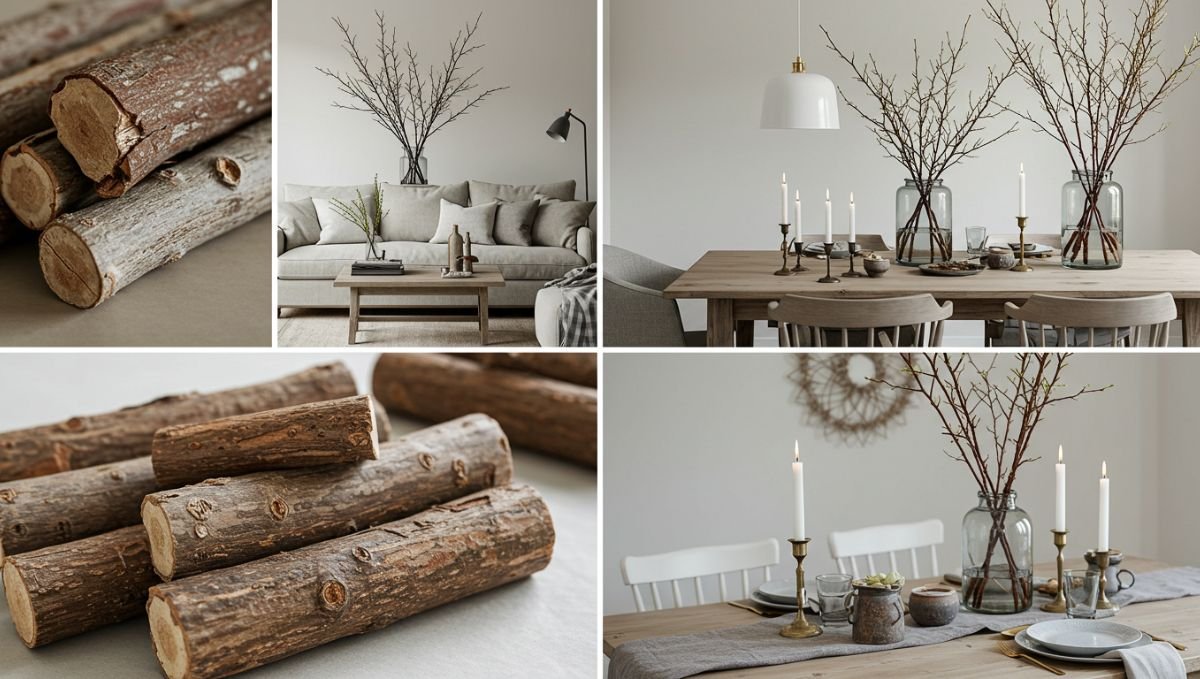
So here’s something that happened to me a while back. I was scrolling through some home decor photos — you know how it goes, just mindlessly saving pictures — and I kept stopping at these interiors that felt… quiet. Not empty, not boring, just calm. Like the room was breathing. Every single one of them had this one thing in common: a few bare, interesting branches sitting in a simple vase. No flowers. No fuss. Just branches.
Took me an embarrassingly long time to figure out what that aesthetic was actually called.
Turns out, it’s a Nordic practice with a name — <b>pyntekvister</b> — and once you understand it, you start seeing it everywhere.
What Even Is Pyntekvister?
The word breaks down simply in Norwegian. “Pynte” means to decorate or adorn. “Kvister” means twigs or branches. Put them together and you get this beautifully practical concept — decorative branches used intentionally inside the home.
But don’t let the simplicity fool you. Pyntekvister reflects the Scandinavian love for nature, balance, and thoughtful living, making it far more than just a decorating trend. It’s rooted in something deeper — this idea that you don’t need manufactured, mass-produced stuff to make a space feel beautiful. A branch picked from the right tree, placed in the right corner, does more for a room than a shelf full of plastic decorations ever could.
Over time, pyntekvister evolved from a tradition born out of nature’s accessibility to an intentional and curated design feature, deeply embedded in the broader Scandinavian aesthetic known for its minimalism and mindfulness.
Why It Actually Works (Not Just Aesthetically)
Here’s the thing people don’t talk about enough — there’s real science behind why rooms with natural elements feel better to be in.
Research in environmental psychology found that exposure to natural organic textures in indoor environments reduced self-reported stress by 15% and improved focus scores by 12% compared to spaces without natural elements. That’s not nothing. That’s your body physically responding to the presence of something organic.
Modern designers have connected pyntekvister to biophilic design, a framework supported by research showing that incorporating natural elements indoors reduces stress and improves cognitive function. A tradition that Nordic grandmothers practiced without a label now appears on mood boards in architecture firms and design studios worldwide.
And honestly? The roughness of a branch — the slight imperfection, the places where the bark curves differently — that’s exactly what makes it work. It doesn’t look like it was manufactured. Because it wasn’t.
Which Branches Are Actually Used?
Not all branches are created equal, and part of what makes this practice interesting is how different types create completely different moods.
Birch
Birch is the default choice for most Scandinavian-inspired arrangements. Its pale bark catches light in a way that makes even a dim corner feel brighter. The thin, papery layers curl naturally over time, adding a lived-in texture that polished decor pieces simply cannot replicate.
If you’re just starting out, birch is probably your safest bet.
Willow
Willow branches provide graceful curves and soft lines. They work beautifully in artistic arrangements where you want a little movement — like the branches are mid-gesture rather than just sitting there.
Flowering Branches (Cherry, Apple)
Cherry blossom branches are seasonal but dramatic. A few stems in a tall vase can transform an entire entryway during spring. Honestly, one of the easiest ways to completely change how a room feels without touching anything else.
Hazel
Branches of hazel are twisted and gnarled and provide a rustic and whimsical look, frequently included in a winter setting. If you want something that looks genuinely sculptural, hazel delivers.
Eucalyptus and Dried Grasses
Dried grasses and lunaria extend the palette beyond wood, working especially well in autumn and winter when muted tones and raw texture matter more than color.
How to Actually Use Decorative Branches at Home
This is where a lot of guides get wishy-washy. Let’s be specific.
In the Living Room
A tall floor vase with three to five birch or willow branches near a window creates an instant focal point. The branches add vertical height without taking up floor space, which makes them especially useful in apartments with limited square footage.
Don’t overcrowd it. The restraint is the whole point.
On the Dining Table
Use a few decorated branches as a centerpiece on your dining table. Choose a low vase so people can see across. A centerpiece that blocks eye contact during dinner is always the wrong call.
In the Entryway
Welcome guests with a stylish branch arrangement near your entrance — it sets the tone for your entire home. First impressions matter, and a single beautiful branch arrangement is way more interesting than a generic welcome mat.
On the Wall
Instead of traditional paintings, mount branches on the wall for a unique, nature-inspired art display. This works especially well in minimal spaces where you want texture without adding furniture.
Seasonal Styling — And Why This Is Its Best Feature
One of the genuinely smart things about this Nordic practice is how naturally it adapts across the year. You’re not stuck with the same arrangement forever.
Swap branches with the seasons to keep displays fresh year-round. Spring calls for blossoms and forced buds, summer favors greenery, autumn works with dried textures, and winter invites frosted or evergreen elements.
And there’s a beautiful old tradition tied to this. The spring påskris tradition deserves special attention. In Sweden, families cut birch twigs weeks before Easter and place them in water indoors. The warmth forces the buds to open, and children decorate the branches with brightly colored feathers. It is one of the oldest living examples of pyntekvister in practice, connecting modern decor trends to traditions that stretch back generations.
That detail got me. Because it’s not just decor — it’s a ritual. Something the family does together, something that marks time passing.
DIY: Starting Your First Arrangement
Good news — you don’t need design experience or a big budget.
Beginners can start by selecting branches with interesting shapes and trimming them to fit their chosen containers. Light sanding helps smooth rough areas, while paint pens or acrylic paint allow for creative details. Some people prefer leaving branches completely natural, while others enjoy adding subtle color or texture.
The process itself becomes a calming activity, offering a break from fast-paced digital life and reconnecting people with hands-on creativity.
And a note on sourcing — branches should ideally be collected responsibly, such as gathering fallen twigs after storms or seasonal pruning. Cutting live branches unnecessarily goes against the philosophy behind this décor style. That matters. The whole ethos here is about working with nature, not taking from it recklessly.
The One Rule Most People Ignore
A single branch in an otherwise empty vase often looks more intentional than a full bouquet. That restraint — the willingness to leave space — is what separates pyntekvister from ordinary flower arrangements.
Seriously. When I first tried this, my instinct was to fill the vase. Add more. Make it look abundant. And it always looked wrong. The moment I pulled half the branches out, the arrangement suddenly looked like it belonged there.
Less. Always less.
Pyntekvister vs. Regular Branch Decor — Is There Even a Difference?
Sort of. What sets pyntekvister apart from generic branch decor is the intentionality behind it. Each arrangement draws on centuries of Nordic seasonal traditions, where branches marked the shift from winter to spring and carried symbolic meaning tied to renewal and growth.
So technically? You could grab any branch and stick it in a vase. But the practice becomes pyntekvister when you’re thinking about it — when you’re choosing the branch for its shape, placing it with care, letting the space breathe around it. It’s a mindset as much as a method.
FAQ
How long do decorative branches actually last indoors?
Dried pyntekvister branches last anywhere from several months to multiple years with minimal care. Fresh or flowering branches are shorter-lived, but dried ones are genuinely low-maintenance.
Do I need a special vase?
Not really. A simple ceramic or glass vase works perfectly. The branch is the statement — the vase is just its support. Tall and narrow for floor arrangements, wide and low for table centerpieces.
Can I paint the branches?
Yes — paint pens give you better control than traditional brushes and come in many more colors, which makes them perfect for detailed branch work. White is popular for winter arrangements. But honestly, natural is almost always the stronger choice.
Is this expensive to start?
Most arrangements cost between $5 and $25 depending on your branch source. Birch branches from a local park, pruned garden cuttings, or dried eucalyptus from a grocery store all qualify. The vase is the only purchase most people need to make.
What if my home isn’t “Scandinavian style”?
Doesn’t matter. It can fit into any style — whether it is farmhouse or modern — decorative branches can work anywhere. The organic texture plays well against almost everything.
Stay Connected with Us for More Informational Blogs
